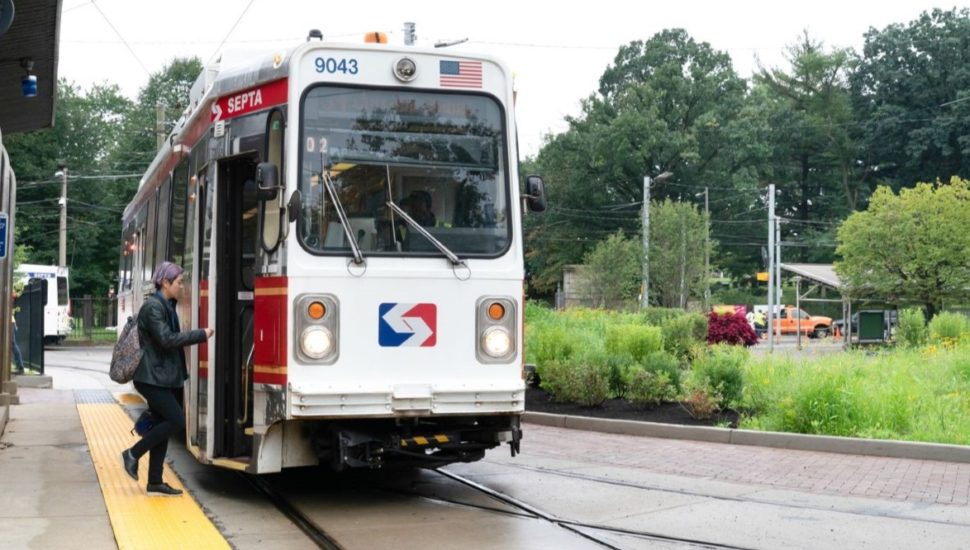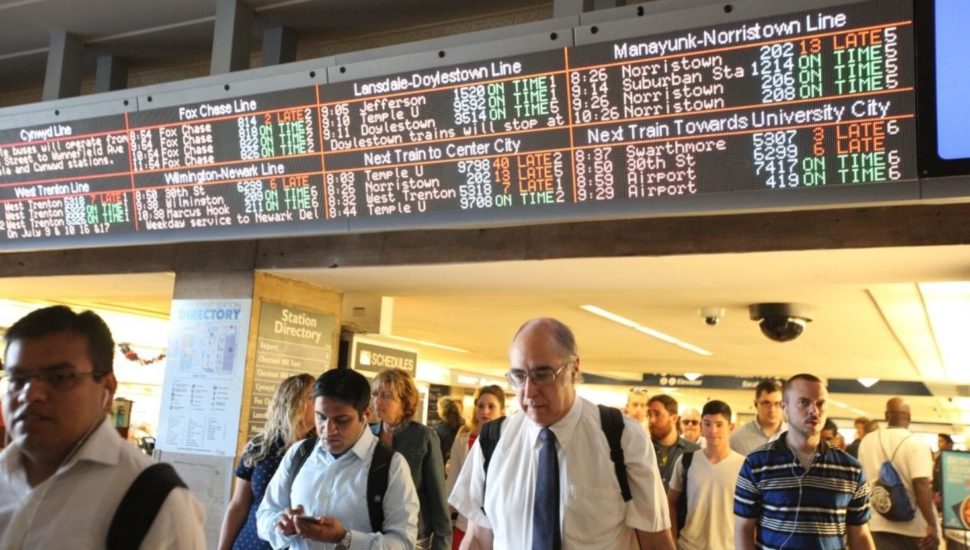

Some miss the perks of traveling to work writes Patricia Madej for The Philadelphia Inquirer.
Others enjoy the extra time and saved money that comes with a commuter-less day, even if movement is limited and work hours are longer.
Walkers and bikers are the most eager to return to their status quo commute.
That makes sense, said Greg Krykewycz, associate director of multimodal planning at the Delaware Valley Regional Planning Commission.
“Very few people are living somewhere because it allows them to drive a long time to get to work,” he said. “That’s a glitch, not a feature. Whereas, biking and walking, it’s a feature, not a glitch.”
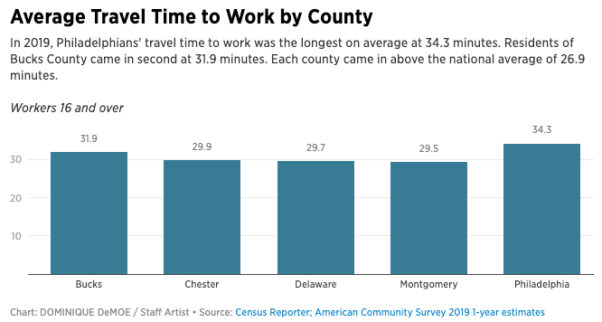
Between 2015 and 2019, the average work commute for Philadelphia’s collar counties was between 27 and 34 minutes. Delaware County’s was 29.7 minutes. Chester County was 29.9 minutes while Montgomery County was 29.5 minutes.
Whatever post-pandemic decisions people mak regarding commuting, the impact will be felt in transportation funding, pollution, congestion, retail, restaurants, real estate, and equity.
Telework means wealthier, white-collar workers can potentially become more productive.
Those who must still commute to lower-paying jobs won’t benefit from extra time or money saved, Krykewycz said.
Read more at at The Philadelphia Inquirer.