
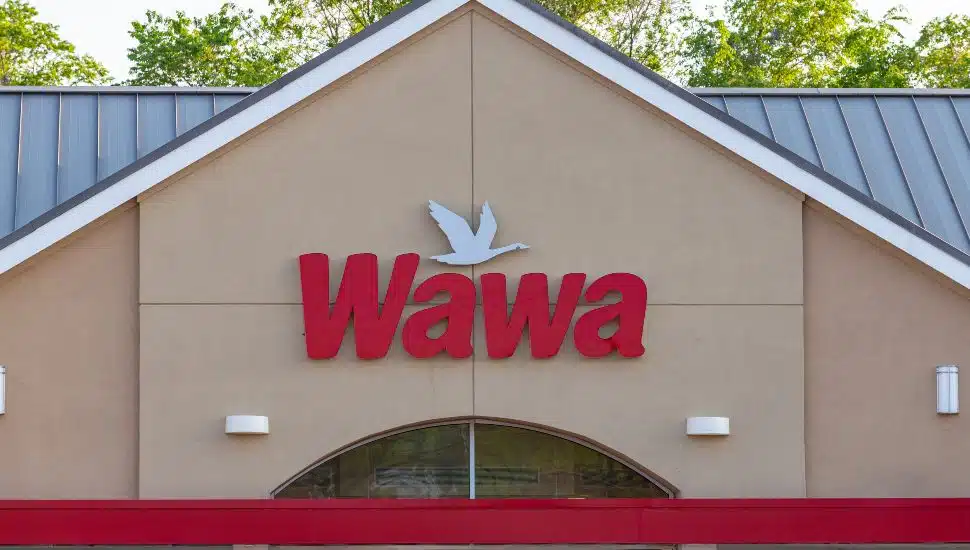
Pull up to any Wawa on a weekday morning, and the sight is familiar.
Coffee in one hand, a Sizzli in the other, a quick meal ordered off the touchscreen before the gas even finishes pumping.
In Delaware County, Wawa is less a store than a fixture of daily life.
People stop in before work, after school, on the way to the Shore, or when dinner plans quietly collapse into a hoagie and a bag of chips.
The goose logo is so woven into the landscape that almost no one stops to ask where any of it came from.
The answer begins with milk.
It Started With a Milkman
In 1902, George Wood founded Wawa Dairy in Delaware County.
The roots stretch back even further, to an 1803 New Jersey iron foundry that later became a textile business, but it was the 1902 dairy that planted the company in Delco soil.
The operation took its name from the surrounding Wawa area, and the famous goose logo traces to that name, long tied to a word for goose drawn from either an Ojibwe or a Lenape root, depending on the source.
Long before hoagies and fuel pumps, Wawa was about dairy farming, fresh milk, and bottles left on the doorstep.
.
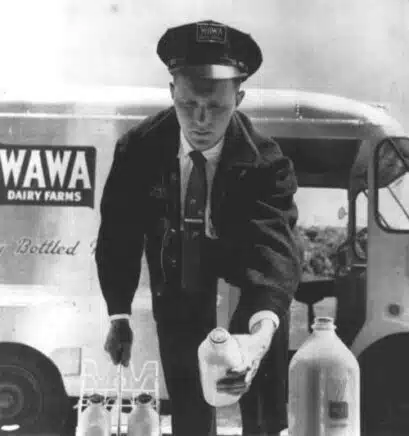
For decades, that was enough.
Families counted on the milk delivery, and Wawa built its name on freshness and trust.
By the early 1960s, shoppers were grabbing milk and groceries at the store instead of waiting for the truck.
The milkman era was ending, and Wawa needed somewhere new to go.
The Folsom Pivot That Changed Everything
On April 16, 1964, Grahame Wood, George’s grandson, opened the first Wawa Food Market at 1212 MacDade Boulevard.
The idea was practical: keep selling the family’s dairy products while meeting customers in the new world of neighborhood convenience shopping.
.
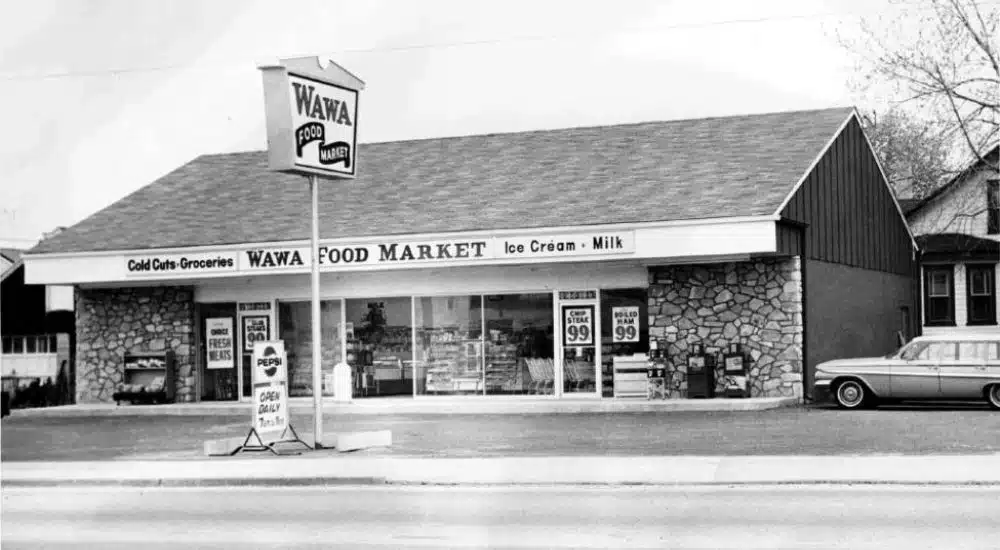
The pivot worked better than anyone expected, and soon, a dairy company had quietly become a retail brand.
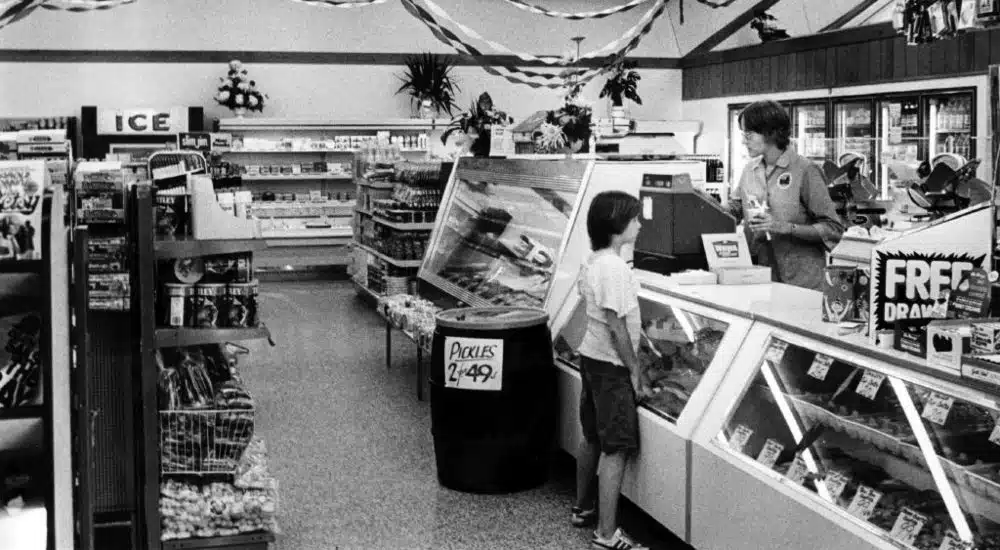
The 1970s gave Wawa the personality it still carries.
Premade hoagies arrived in 1970, around the time the company opened its first Philadelphia stores, including one at 36th and Chestnut.
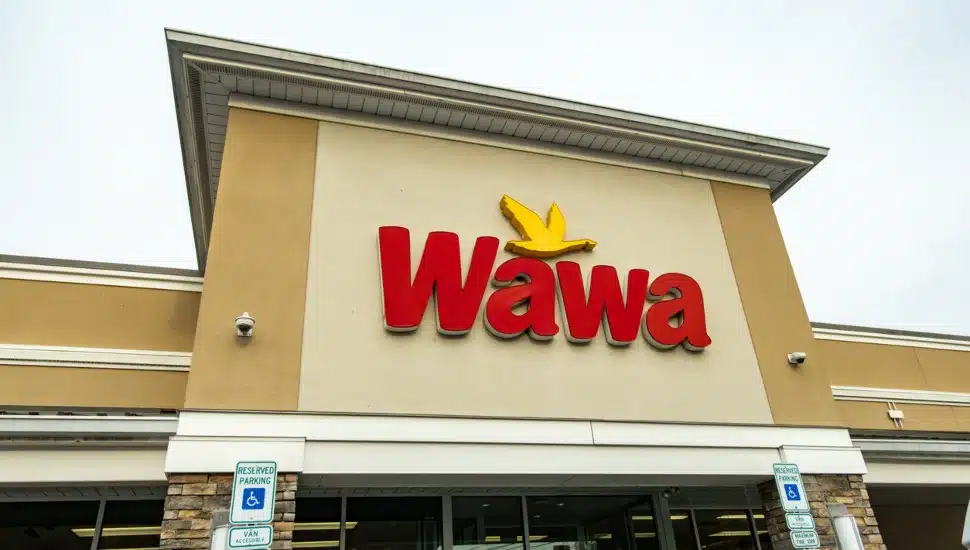
The goose-and-gold logo landed in 1974, and a year later, store managers started brewing and selling coffee.
.
That logo carries a Delco footnote of its own.
The original goose was designed by a Villanova University student and a part-time worker at Wawa, and it was good enough that later designers barely touched it.
The brand even gave the bird a name and a wardrobe: Wally Goose, a Canada goose in a Wawa shirt, who still shows up at store openings and in ads.
How Hoagies Became a Way of Life
Food turned into the engine of the brand.
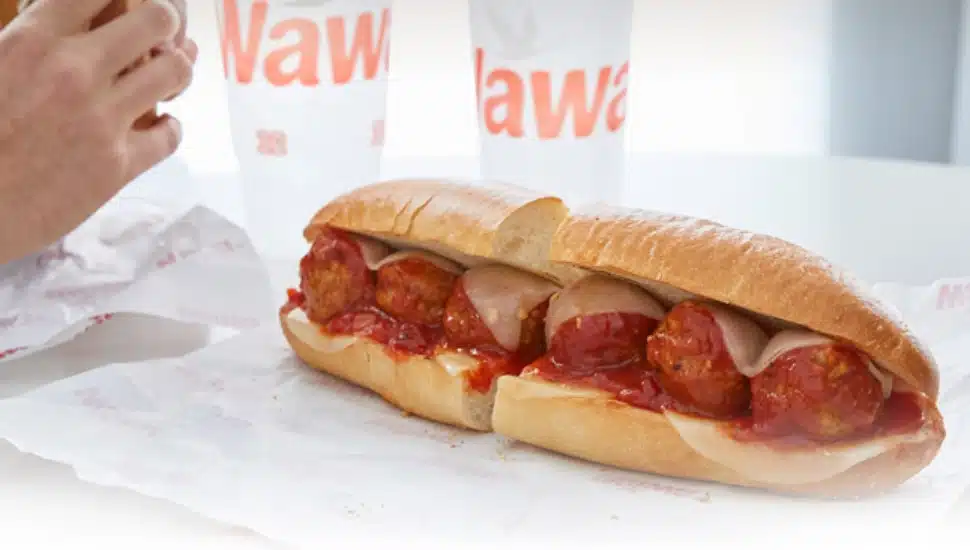
Hoagies, breakfast sandwiches, coffee, the Gobbler, and eventually touchscreen ordering made Wawa feel fast and personal at the same time.
Two summer rituals cemented the hoagie’s hold.
The first came in 1992, when Wawa held its inaugural Hoagie Day and Mayor Ed Rendell declared the hoagie the official sandwich of Philadelphia. The free giveaway near Independence Mall has run every year since.
The second arrived in 2008 with HoagieFest, the summer promotion that drops the prices of Shortis and Classics from mid-June into August.
HoagieFest grew into a genuine cultural marker, big enough to pull in celebrity fans like Jason and Kylie Kelce.
Then came the Super Wawa.
Bigger stores, more parking, restrooms, full food service, and fuel pumps put Wawa in direct competition with convenience stores, gas stations, and fast-food chains all at once.
.
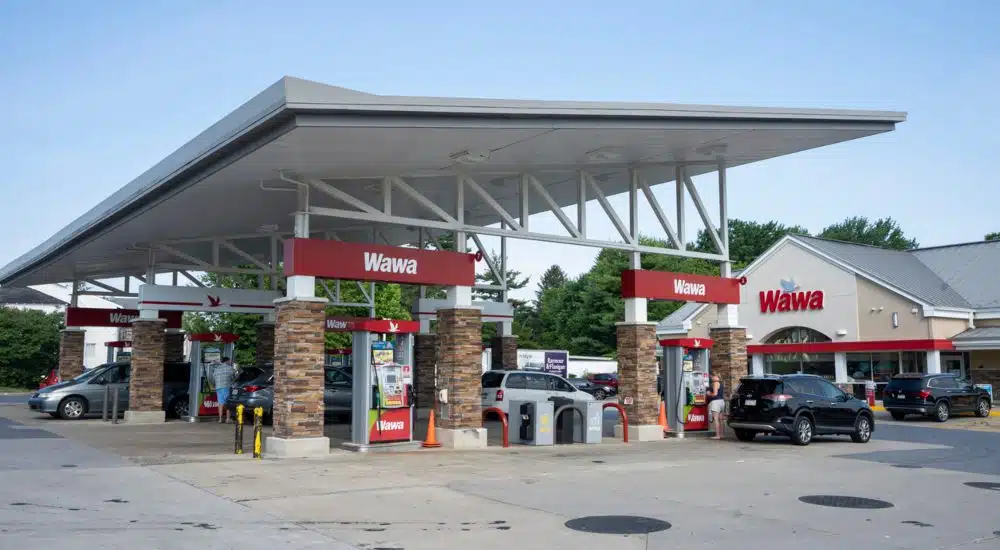
The footprint pushed past Pennsylvania, New Jersey, Delaware, Maryland, Virginia, Florida, and Washington, D.C., into newer ground including North Carolina, Alabama, Georgia, Ohio, Indiana, Kentucky, West Virginia, and most recently Tennessee.
The Story Behind the Counter
There’s one more chapter most customers never see, and it sits behind the counter.
Wawa is employee-owned. Through an Employee Stock Ownership Plan, associates hold roughly 38 percent of the company.
There are no outside shareholders, and every store is company-owned rather than franchised.
The payoff can be life-changing.
Longtime associates who spent years brewing the coffee and building the hoagies have retired with seven-figure stock balances.
Counts vary by source, but Wawa now runs somewhere around 1,200 stores.
While the chain has long since outgrown Delaware County, the story has not. The dairy roots, the name, the headquarters, and that first Folsom food market all lead back to Delco.
Wawa reaches across the East Coast and beyond now, but the beginning is still here.
_______