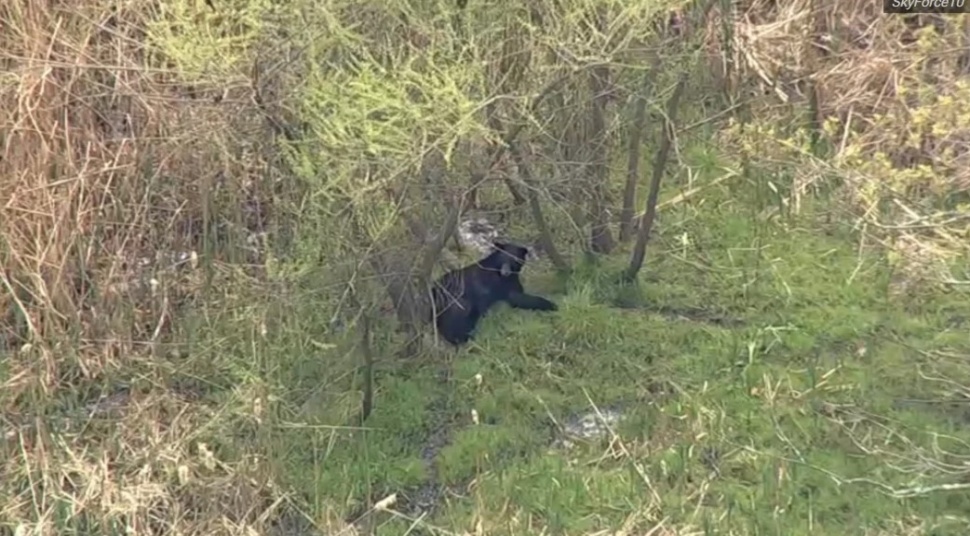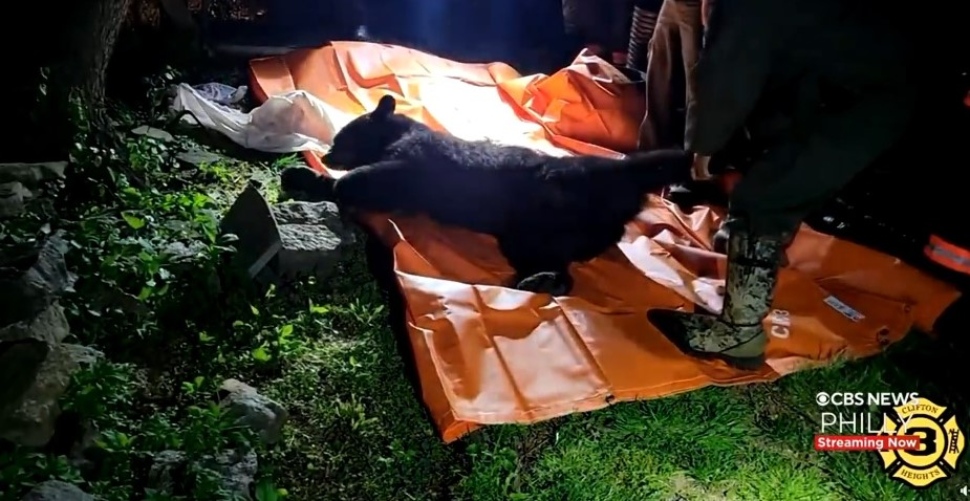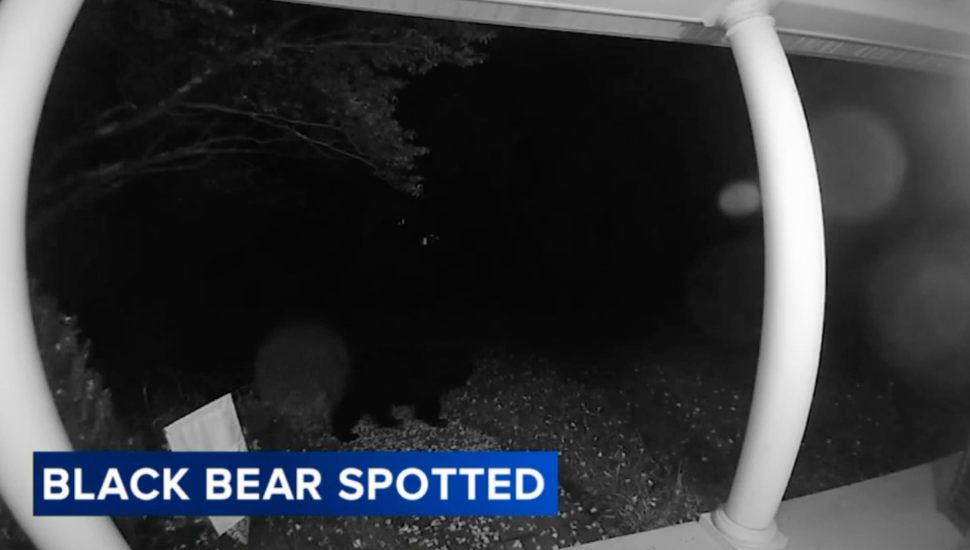

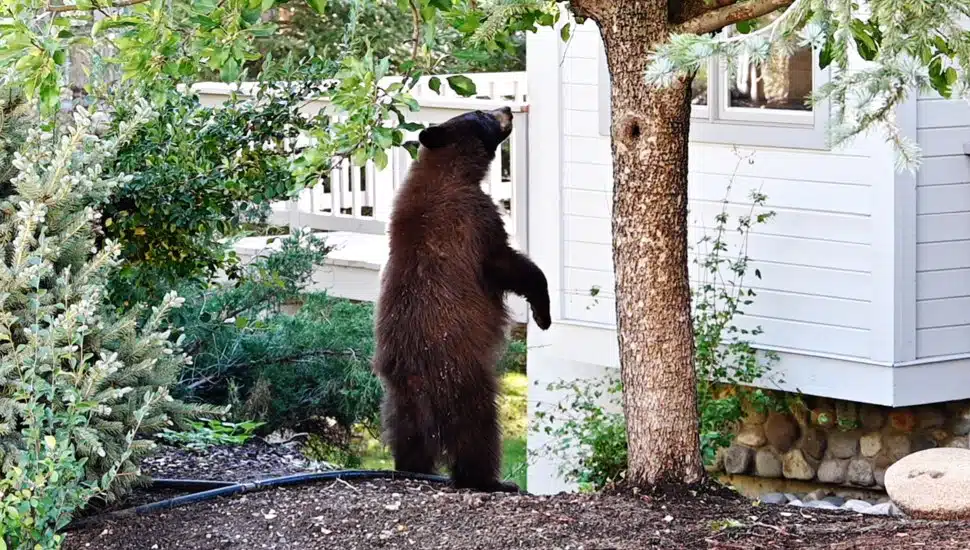
A black bear strolling through Media is not something Delaware County residents see every day.
But there it was, caught on a neighbor’s home security camera, ambling through the suburbs as if it had every right to be there.
The sighting adds Delco to a growing list of southeastern Pennsylvania communities where black bears have turned up this spring, with recent reports also coming out of Chester, Bucks, and Montgomery counties.
For homeowners, though, the appearance is less a reason to panic than a reminder: a passing bear usually is not looking for trouble. It’s looking for food or, this time of year, simply for somewhere to go.
Most of the bears wandering local neighborhoods right now are young males.
Between roughly April and June, they strike out on their own in search of territory or a mate, covering long stretches of ground in the process.
A bear like that isn’t moving in. It’s passing through.
That helps explain the seemingly random routes. Denser suburban southeastern Pennsylvania is more of a corridor than core bear country.
Bears favor large, connected forests, but they will follow wooded edges, parks, creek valleys, farm borders, and quiet neighborhoods as they travel.
So a bear may turn up on a porch, beside a trash can, or square in front of a doorbell camera.
The path can look bizarre to people. To a bear following its nose, it makes perfect sense.
And the nose is the whole story. Black bears are powerful animals, but above all they are opportunists.
If a yard smells like an easy meal, a traveling bear will happily stop to investigate.
Trash cans, bird feeders, pet bowls, greasy grills, compost piles, and fallen fruit can each turn an ordinary backyard into a roadside diner.
Which points to a simple goal: make your yard boring.
There’s a legal reason to keep it that way, too. In Pennsylvania, it’s illegal to intentionally put out food, fruit, grain, salt, or other minerals to feed bears, or to do anything that might cause them to gather or settle into an area.
The most effective defense is to remove whatever might tempt one in the first place.
Start with the trash, the single biggest attractant.
When bears have been reported nearby, resist the urge to set garbage out the night before collection. Keep it in a garage, shed or secured container, and roll it to the curb the morning of pickup.
Bird feeders run a close second. Birdseed is dense with calories, and to a bear a feeder reads like a hanging snack machine.
The easiest fix is to take feeders down for a while when bears are around.
For those who want to keep feeding their birds, Audubon Pennsylvania suggests skipping the items bears crave most, like sunflower seeds, hummingbird nectar, and suet, bringing feeders in overnight, or hanging them at least 10 feet off the ground and 4 feet from anything a bear could climb.
Pet food belongs indoors.
Even a half-empty bowl on the back step can draw wildlife, and the same goes for food scraps, compost, and anything with a strong odor.
Grills deserve attention as well.
After cooking, burn off the residue, empty the grease tray, and wipe the surfaces down. A grill that still smells like last weekend’s burgers can stay interesting to a bear for days.
Fruit trees and gardens are worth watching, especially once ripe fruit drops and lingers on the ground.
And anyone keeping chickens, beehives, or livestock feed should take extra care, since those are high-value prizes that may call for electric fencing.
It also pays to look past your own property line.
One overflowing trash can or full feeder on the block can quietly undo a whole neighborhood’s effort, which is why the Game Commission encourages residents to get their neighbors on board.
On a street where every yard is boring, a bear has no reason to stick around.
If one does turn up, stay calm.
Do not approach it and do not feed it, but you don’t have to just wait it out, either.
The Game Commission’s advice is to shout the bear off the way you would shoo an unwanted dog, from a safe distance, and give it a clear path to leave. Keep pets inside.
If the animal will not move along, or seems trapped or unable to retreat safely, call local police or the Pennsylvania Game Commission.
The good news is that most suburban bear visits are brief. A bear that finds nothing worth eating almost always keeps moving.
So while the Media bear handed Delco a jolt of neighborhood drama, the lesson for homeowners is refreshingly practical.
Secure the snacks, scrub away the smells, and make the backyard as dull as possible.
A boring yard, at least to a bear, is exactly the point.
_______