

Most of us have heard of Valley Forge, but not many people really understand what happened there, or why it mattered so much.
It wasn’t a battle, and no famous victory was won in the snow. But the winter encampment at Valley Forge was one of the most important turning points of the American Revolution.
It’s where George Washington’s tired, hungry soldiers learned to work together, trained to fight like professionals, and found the strength to keep going when quitting might have been easier.
Setting the Stage
In the winter of 1777, the American Revolution was not going well. The Continental Army, led by General George Washington, had just lost two big battles: one at Brandywine River and another at Germantown.
The British Army had captured Philadelphia, which was America’s capital and biggest city back then. Washington’s soldiers were tired, cold, and hungry. Many didn’t even have shoes!
Washington needed a safe place for his army to rest and get stronger. But he couldn’t go too far because he had to keep an eye on the British in Philadelphia.
So he chose a spot about 20 miles away, in a quiet valley with forests, fields, and a river nearby.
The place was called Valley Forge, and it would become one of the most famous camps in American history.
A Cold and Hard Winter
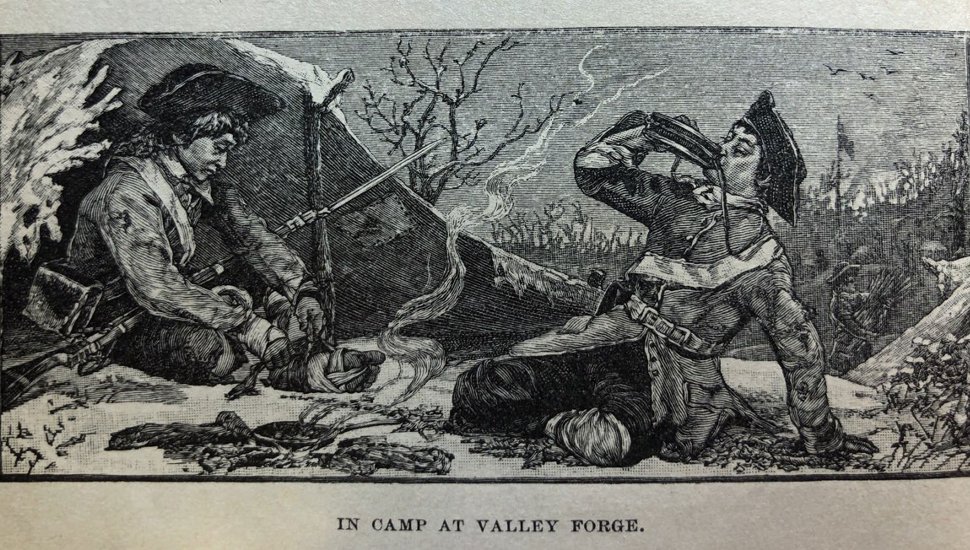
In December 1777, about 12,000 soldiers, with approximately 400-500 women and children accompanying them, marched into Valley Forge. The men chopped down trees and built small wooden huts to live in, but they had very little food or warm clothes.
Some wrapped their feet in rags because they didn’t have boots.
There wasn’t enough food to go around. The soldiers mostly ate simple bread made from flour and water, called firecakes.
Because it was so cold and everyone was so weak, sickness spread quickly. Many soldiers got smallpox or other diseases. Around 2,000 men died before spring came.
But even though things were terrible, the army didn’t give up. The soldiers kept believing in what they were fighting for — freedom.
General Washington stayed right there with them, walking through camp, talking to his men, and keeping their spirits up.
His wife, Martha Washington, even came to help. She sewed clothes, cared for sick soldiers, and made sure everyone felt supported.
A Man Named von Steuben Changes Everything
In February 1778, a man named Baron Friedrich von Steuben arrived at Valley Forge. He was a soldier from Prussia (that’s part of modern-day Germany). He didn’t speak much English, but he really knew how to train an army.
Von Steuben taught the soldiers how to march, line up, load their muskets quickly, and fight together like a real team. Before this, the army was brave, but not very organized. Von Steuben’s lessons turned them into a strong, smart, professional army.
He even wrote a training book called the “Blue Book” that showed soldiers exactly how to move and fight. They practiced every day, even in the snow. Slowly, the men started to feel proud and confident again.
Spring Arrives — and the Army Marches Out
By June 1778, spring finally melted the snow. The soldiers were stronger, healthier, and ready to fight again. Around the same time, America got some great news that France had decided to help in the war!
That meant more soldiers, supplies, and ships to fight the British.
The British Army, led by General Henry Clinton, decided to leave Philadelphia and go back to New York City. Washington and his newly trained army left Valley Forge and went after them.
The two sides met in New Jersey at the Battle of Monmouth.
It was a super-hot day, some soldiers even passed out from the heat, but Washington’s army fought hard.
They didn’t win the battle, but they didn’t lose either. That was a big deal! Just six months earlier, they couldn’t have stood toe-to-toe with the British. Now they could.
Why Valley Forge Still Matters
Valley Forge wasn’t a battle, but rather a test of courage. The soldiers had to fight through hunger, sickness, and cold weather without giving up. It was where the American army learned to never quit, no matter how hard things got.
When they marched out of Valley Forge, they were no longer just farmers with muskets, they were a real army, ready to win independence for their country.
From the frozen huts of Valley Forge to the warm winds of victory years later at Yorktown, Washington’s soldiers carried the lessons they learned that winter: never give up, work together, and believe in what you’re fighting for.
Leaving You With This
So when you hear the words “Valley Forge,” don’t just picture snow and shivering soldiers. Think about what really happened there: a group of everyday people who refused to give up, even when things looked impossible.
That winter didn’t break them; it built them.
When Washington’s army marched out of Valley Forge, they carried with them more than muskets and flags; they carried the spirit that would help win America’s freedom.