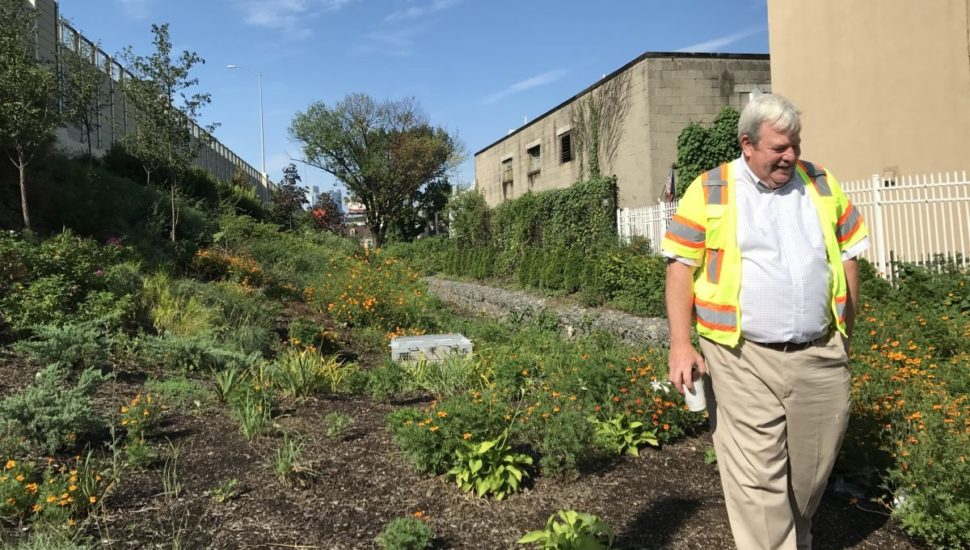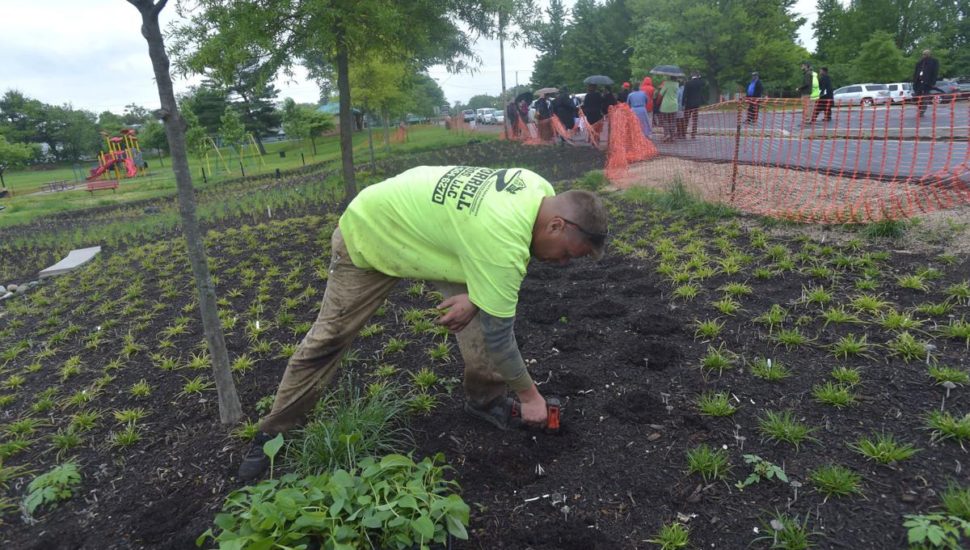

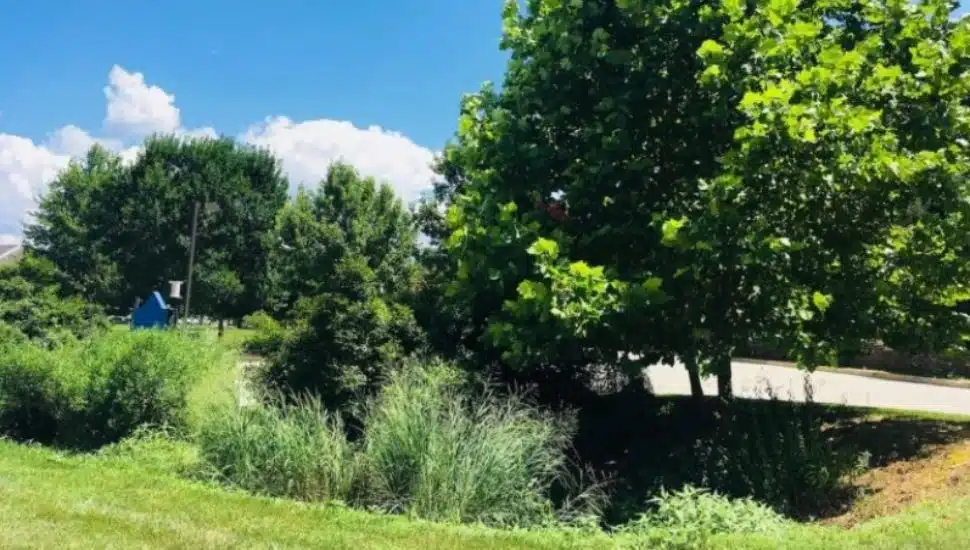
Villanova University researchers have been monitoring a university rain garden for 20 years and can now show that rain gardens are good at soaking up stormwater runoff and preventing pollution from entering waterways, writes Zoe Read for WHYY.
Storms wash pollution off streets and buildings and sewage overflows because of outdated sewer systems in the Philadelphia region that accept storm water and raw sewage.
When the systems overflow, the runoff and sewage end up in rivers and streams.
Rain gardens could be part of a solution.
“Overall, what we ended up seeing is that the system can manage a lot of the water that’s coming in off the watershed. And we’ve seen that it’s been able to consistently do that over time,” said researcher Bridget Wadzuk, associate director of the Villanova Center for Resilient Water Systems.
Rain gardens collect storm water and use plants and soil that can soak up water and pollutants from buildings and roads.
Villanova used U.S. EPA and Pennsylvania Department of Environmental Protection funding for its lengthy rain garden monitoring.
The rain gardens work best when they are well maintained and feature a diverse range of plants.
Read more about what else Villanova discovered about rain gardens at WHYY.