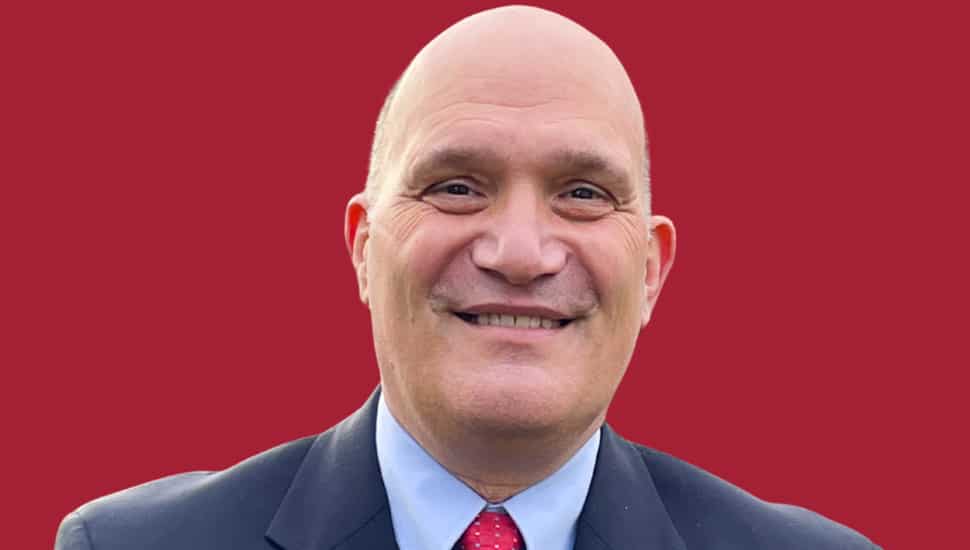

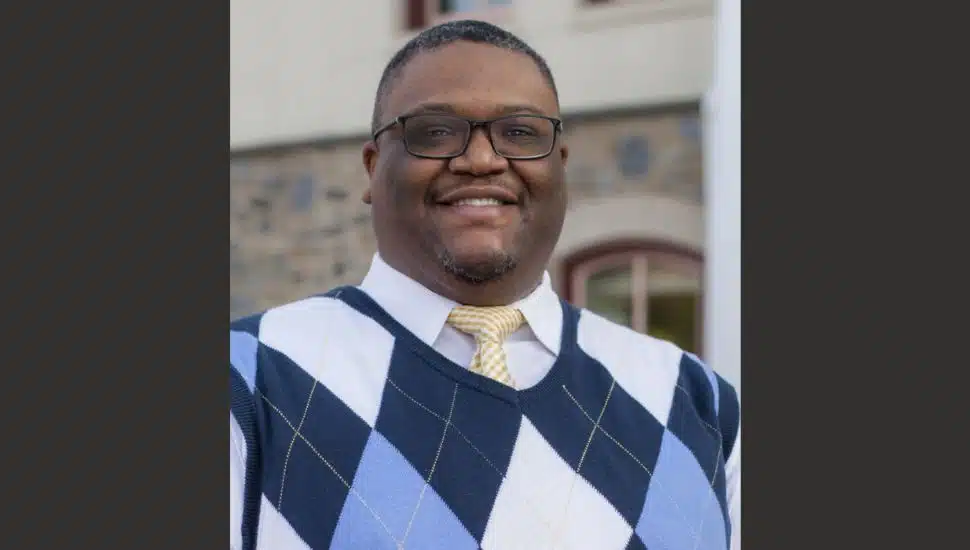
Dr. Austin Duckett, Chief Student Affairs Officer at Penn State Brandywine, spoke with DELCO Today about growing up in Conshohocken — spending time outdoors with his brother, exploring neighborhood parks, and learning early lessons in leadership and responsibility while delivering newspapers and serving customers as a cashier at the local ACME.
Those early experiences helped shape the work ethic, curiosity, and sense of community that continue to guide his leadership today.
Duckett grew up in a close-knit community where neighbors looked out for one another and young people learned quickly what it meant to show up, work hard, and be dependable. While college was not always the default path openly discussed for many students of his generation, Duckett was surrounded by family members, teachers, and mentors who encouraged him to pursue opportunities beyond what others expected.
Today, his work in student affairs centers on helping students define their own goals, realizing their potential, and building meaningful out-of-classroom experiences that support their growth, belonging, and long-term success.
Where were you born, and where did you grow up, Austin?
I was born in Montgomery County Hospital in Norristown and raised in the vibrant and storied town of Conshohocken. I’m the oldest of three children, though my childhood was largely spent growing up alongside my younger brother. The name Conshohocken is commonly translated as “Pleasant Valley,” originating from the Unami language of the Lenape people, and it truly lived up to that name as a place to grow up.
What did your mom do? What did your dad do?
My mom was a stay-at-home mom for the first part of my childhood, and she was the anchor of our household. She made sure my brother and I were cared for, protected, and had everything we needed — from food, clothing, and shelter to stability and happy times.
As we got older, she went back to work, sometimes holding multiple jobs at once, and ultimately served most notably as a warehouse supervisor and manager at Action Duplication, balancing long hours with the responsibilities of raising us. I credit a lot of my work ethic and sense of responsibility to watching how hard she worked to make sure we always had what we needed.
My father was starting his own garage door business, which over the years has grown into a recognizable name. His work often had him traveling throughout the region — from Philadelphia to Virginia to Maryland to New Jersey and more.
My parents separated when we were young, and during that time, my mom continued to be the steady presence who held everything together for us.
What memories stand out from growing up in Conshohocken?
I grew up on Hector Street, between Elm Street and Spring Mill Avenue, and I have so many great memories from that time — probably too many to mention here. Most of my childhood was spent playing with friends, creating adventures on our bikes, watching Saturday morning cartoons (which is still my favorite time of the week), and reading … who remembers the Pizza Hut Book-It program?
I have great memories of exploring our neighborhood parks, helping neighbors, and spending time with our grandparents. My grandparents’ house felt like a second home. Spending time there gave me a different perspective on hard work, pride, and what it means to build something meaningful in life.
I’m incredibly thankful for that kind of upbringing because it taught us independence while also reminding us that it was okay to ask for help when we needed it. People in the neighborhood looked out for one another. Your friends’ moms were your moms, and everyone had a hand in making sure the kids were doing the right thing. It was a wonderful and safe environment for us to grow up in.
Did you play any sports while you were growing up?
My sport of choice was volleyball. Growing up in Conshohocken, the sports that got the most attention were always football and basketball, but neither one really captured my interest. I was drawn to volleyball because it felt different. I was introduced to it in middle school by two great gym teachers, Mr. McMahon and Ms. Lieberman. They made a point of exposing us to a variety of sports, and our district even hosted volleyball tournaments that you could sign up for with friends. I started playing, practiced whenever I could, and quickly fell in love with the game.
When I got to high school, I joined the JV team as a freshman and eventually worked my way onto both the junior varsity and varsity squads. I primarily played setter but also spent time as a right-side hitter and defensive specialist.
My connection to the sport didn’t end there. I continued playing in college and later had the opportunity to come back and coach some of the girls’ volleyball teams, which was incredibly rewarding.
Is there a specific game you remember that stands out?
In my senior year of high school, we worked so hard to get to the first round of district playoffs. By that time, my team had been together for about three years, and we were a well-oiled machine. Our first match was against Souderton High School, which was the best in the region. We pulled out every stop, trick, and strategic play. Everything.
But alas, it wasn’t enough to win. We got knocked out in that first round, but we gave it our all. After the game, the setter from Souderton said, “Hey, you ran a really good offense.” That taught me, despite the odds, to never give up, and that you can lose gracefully and emerge victorious in other ways. Volleyball taught me a lot about teamwork and communication, two things that still shape how I approach leadership today.
Did you have jobs when you were growing up?
For my first job, I delivered newspapers for The Times Herald. Every day of the week, except Sunday, the papers arrived at my house at 5:00 AM. I had clients all the way from the high avenues down to Elm Street, so I had to roll all the papers from 5:30-6:15 AM, pack them in my bag, put them on my bike, and be on my way.
That daily routine taught me about discipline, preparation, and being relied upon. I even managed the collection of our customers’ weekly fees. It’s crazy how people are so weird about the collections part. It taught me to be persistent without being rude.
Next, I was a bagger and checker at the ACME in Conshohocken, and I kept my job through high school. I learned how to understand, empathize, and listen to people, always with a goal to make them smile or feel better about the day.
During the summers between college, I worked at either the Coyote Crossing Mexican Restaurant or the Conshohocken Public Works Department, where I learned more about customer service, problem-solving, and the value of physical labor.
What kind of music floated your boat back in high school and college?
I had an appreciation for all music, from R&B to soft rock to alternative to rap to classical. I grew up with my parents having music nights with their friends every Tuesday evening. I was the nosey kid trying to hear what the adults were talking about, but inadvertently exposed to most classic R&B, things you would hear on WDAS, all the ’60s, ’70s, and ’80s songs. So, that’s where I got my start.
Did you have a particular artist that you liked?
My favorite artist was Michael Jackson, and my favorite song was “Man in the Mirror.” His videos, like “Thriller,” were fascinating to me, but “Man in the Mirror” always stood out. The message about looking inward and taking responsibility for the change you want to see in the world really resonated with me.
Even now, that idea still connects to the way I approach leadership. If you want to improve a community, an organization, or a campus, the first step is being willing to reflect on your own actions and ask how you can do better. That message has stayed with me throughout my life and career.
Where did you go for college, and why there?
I earned my bachelor’s degree in Business Administration from Lycoming College. While I was in high school, I had the opportunity to dual-enroll in the Information Technology and Accounting program at our local technical school, which opened the door for me to attend Pennsylvania Free Enterprise Week (PFEW).
PFEW is a nationally recognized summer program that gives high school students a hands-on introduction to business leadership and the American free enterprise system. The program was hosted at Lycoming, and spending that week on campus was a turning point for me. I fell in love with the environment, the people, and the idea of being independent while experiencing something completely new. That experience ultimately led to a scholarship opportunity at Lycoming, and the rest, as they say, is history.
Was Lycoming College a good choice for you, looking back?
Absolutely. Lycoming had the major I wanted, but more importantly, it opened the door to leadership opportunities and meaningful relationships with mentors I still stay in touch with today.
It also pushed me outside of my comfort zone in ways that helped shape who I am today. Growing up in Conshohocken and attending Plymouth Whitemarsh High School, I experienced a fairly diverse environment where students from many different backgrounds learned and grew together.
Lycoming, however, was a predominantly white institution, and at the time, there were very few students of color on campus — maybe around ten of us, including international students. That experience challenged me to find my voice, build community, and advocate for representation and inclusion in ways I hadn’t needed to before.
Looking back, that environment helped me develop the confidence and sense of responsibility to speak up, support others, and work toward creating spaces where everyone feels they belong.
What’s the biggest lesson you experienced at Lycoming College?
Lycoming pushed me to pursue excellence and to look for potential in other people.
A couple of years ago, I had the honor of receiving the Sankofa Award from the Black Student Union at Lycoming, and it was an incredibly emotional moment for me. When I was a student there, one of the last things I worked on was helping reactivate the Black Student Union. At the time, it was a small group of maybe three or four students, but we believed it could become something meaningful for the campus community.
Years later, when I returned to campus, the organization had grown to more than 60 students, and several student body presidents had come from that community. Seeing that kind of growth gave me goosebumps. It was a powerful reminder that when you invest in people and institutions, the impact can continue long after you’ve moved on.
So, how did you end up at West Chester University?
One of the student leaders who helped reactivate the Black Student Union with me went on to work at Ursinus College after graduation. At the time, I had started a career in banking and was exploring a path in corporate finance, but she told me about a role at Ursinus that focused on student leadership development — many of the same things I had been passionate about as a student.
That opportunity opened my eyes to the possibility of turning that passion into a career. While working at Ursinus, I connected with Todd McKinney, who became an important mentor. His wife, Marion McKinney, was the Director of Residence Life at West Chester University and had a graduate assistantship position available that would cover the cost of a master’s degree.
As a first-generation college student, graduate school had never really been part of my original plan. But I applied, was accepted, and that opportunity changed everything. I went on to complete my graduate studies at West Chester and continued working there for another five years, gaining incredible experience and working alongside colleagues who shaped my professional path. It was also where I met my wife, so I have very fond memories of my time as a Golden Ram.
Who saw promise in you, Austin, and gave you opportunities?
I have to start with my relationship with my faith. That foundation helped shape how I think about purpose, responsibility, and service to others.
My mom was also a tremendous influence in my life. She worked incredibly hard to make sure my brother and I had everything we needed and always encouraged me to pursue opportunities she didn’t necessarily have herself. My grandparents reinforced that same message. They believed deeply in education and constantly reminded me that each generation should open doors for the next one.
I was also fortunate to have teachers who saw potential in me at a very young age. Ms. Mary Bolognese and Ms. Martha Purcell were among the first people outside my family who encouraged me to take responsibility, step up as a leader, and believe in my abilities.
Later, two educators had a particularly meaningful impact on my path. Dr. Jill Clark, my English teacher, helped instill a confidence in my writing that I had never had before. She worked with me on my college essay and helped me begin to see myself as someone who belonged in a college environment.
Dr. John Joe, my Spanish professor for two years, was also an important role model. He is a Hall of Famer at Lycoming College, and I’ve always admired him as an educator and as an example of Black excellence in academia. He’s being honored with an alumni award this May, and I’m excited to attend that ceremony with him. Those mentors showed me how powerful it can be when someone believes in you early, and that’s something I try to carry forward in the work I do with students today.
What do you think those teachers saw in you?
I think they saw a kid who was kind, dependable, and genuinely cared about doing the right thing. I followed instructions, took my schoolwork seriously, and tried to treat people with respect. Manners were a big part of how we were raised in my household, and that shaped how I showed up in school.
Because of that, my teachers trusted me with opportunities to lead small things in the classroom — helping organize activities, supporting classmates, or taking on extra responsibilities. Looking back, those moments were important because they helped me see that leadership isn’t always about being the loudest voice in the room. Sometimes it’s about being dependable, showing care for others, and doing the little things well.
What about professionally, after college?
I’ve been fortunate to learn from a number of supervisors and mentors throughout my career who helped shape the leader I’ve become. Dr. Sue Saunders was an important influence early on. She served as my dean of students at Lycoming when I was a student and later became a professional mentor who helped me think more intentionally about leadership and service in higher education.
I also had several supervisors and mentors who pushed me to recognize strengths I didn’t always see in myself. Dr. Denise Gifford, Dr. Greg Nayor, and Dr. John Downey each challenged me to grow, take on new responsibilities, and develop talents I hadn’t fully realized yet.
Their mentorship has a lasting impact on me, and it’s one of the reasons I feel strongly about investing in the next generation of professionals in our field. The support and encouragement they gave me is something I try to pay forward to the younger professionals and students I work with today. Mentorship can change the trajectory of someone’s life. I know that firsthand, and it’s why I try to create those same opportunities for others whenever I can.
So, you’re at Penn State Brandywine now. What are your challenges and opportunities that you’re working on?
I’m still relatively new in the role, but one of the most exciting parts of the work is helping strengthen the experiences students have outside the classroom. Student affairs focuses on the parts of college life that complement the academic mission, including things like campus engagement, service learning, leadership development, counseling and health services, spiritual life, and study away opportunities.
For many of us, those out-of-classroom experiences are where some of the most transformational learning happens. When students feel connected — when they feel like they belong — they’re more likely to thrive academically and personally.
What makes Penn State Brandywine especially exciting is the ability to combine the world-class reputation of the Penn State system with the personal feel of a smaller campus. That allows us to really know our students, understand their goals, and create opportunities that help them grow into confident leaders who are ready to contribute to their communities and the world. The biggest challenge and opportunity is to build a comprehensive campus-wide strategy to bring this vision to life. It will take time.
What are you most excited about, Austin?
One thing that excites me most is the chance to help students thrive academically, personally, and professionally. I will be focusing on the faces, spaces, and places at Penn State Brandywine — a nod to an inclusive excellence framework. With friendly faces, we’ll create meaningful spaces and invite our students to transformative places.
Part of that work is helping people better understand the role student affairs plays on a college campus. Much of what we do happens outside the classroom through clubs and organizations, service opportunities, leadership programs, mental health and well-being services, and campus traditions, but those experiences often play a huge role in whether students feel connected and ultimately persist to graduation.
When students find a place where they belong, where they can lead, serve, and build relationships, it changes their entire college experience. Being able to help shape those opportunities for our students is something I’m really excited about.
What do you do with all your free time?
When my wife, Michelle, and I were planning our wedding, we were looking for a unique food truck experience for our guests to end the evening with. We couldn’t find what we wanted and went in a different direction. However, that moment of possibility stayed with us. Fast forward to COVID, and we decided to use our time and create an experience that we wanted to introduce to the world.
Savor the Moment, a mobile treat truck experience, was born! For the past four years, we’ve brought the truck to weddings, celebrations, community events, and more — creating fun, memorable experiences for people. It’s been a great reminder that leadership and creativity can show up in many different ways.
Do you read much?
I find myself coming back to books that are relevant to the time. Right now, I’m reading The First 90 Days, which talks about transition and senior leadership.
And I’m a big Mel Robbins fan, so I’ve been spending time with Radical Candor and Let Them. There are many things in your life that you cannot control, so you “let them.” It helps you spend your energy in a meaningful way. It has been life-changing for me to think of my time in this way.
Last three questions, Austin. Over the last 10 to 15 years, what’s something big that you’ve changed your mind about?
Earlier in my life, I believed that expectations alone were enough to motivate people. Growing up, there were often assumptions about what someone who looked like me might or might not achieve, and part of my journey has been about pushing beyond those boxes.
But over the last 10 to 15 years working in higher education, I’ve realized that expectations by themselves aren’t what truly motivate young people. Today’s students want to understand the purpose behind what they’re doing. They want to know how their education connects to the future they’re building for themselves.
That realization has changed how I approach my work. My role isn’t just to set expectations for students; it’s to help them see their own potential and understand the impact they can have on their communities and the world around them.
It’s a crazy world, Austin. What keeps you hopeful and optimistic?
My niece and nephews, Evie, James, and Noah. They’re six, five, and four. I take my role as “funcle” — the fun uncle — very seriously as an opportunity to make a difference by pouring into them the things they’re going to need to learn. To be kind. To be tough in certain situations. Looking at kids their age, who are bright and funny and want to help others, that keeps me hopeful.
A lot of the things happening in the world are taught or learned. So, if you can keep your arms around a child, you can teach them kindness, too. You can teach them justice, fairness, empathy, and resilience. Also, I find hope in seeing other people in the world who want to protect our youth, and who would do the right thing, regardless of political affiliation, racial identity, or socioeconomic status.
Finally, Austin, what’s the best advice you’ve ever received?
“Moments matter. Make it count.”
No one person gave it to me. I developed it through my relationships with my family, friends, and mentors.
The moments you have are not promised, so when you have an opportunity to do something, change someone’s life, give them access to something they didn’t have before, you should do it, because you never know how that moment is going to matter.
When people talk about me after I’m gone, I want my legacy to be that I always made time for the moments that matter. That’s why I’m attracted to this work, because I get to do that every day.
___________
Publisher’s Note: Helen Harris contributed to this profile.