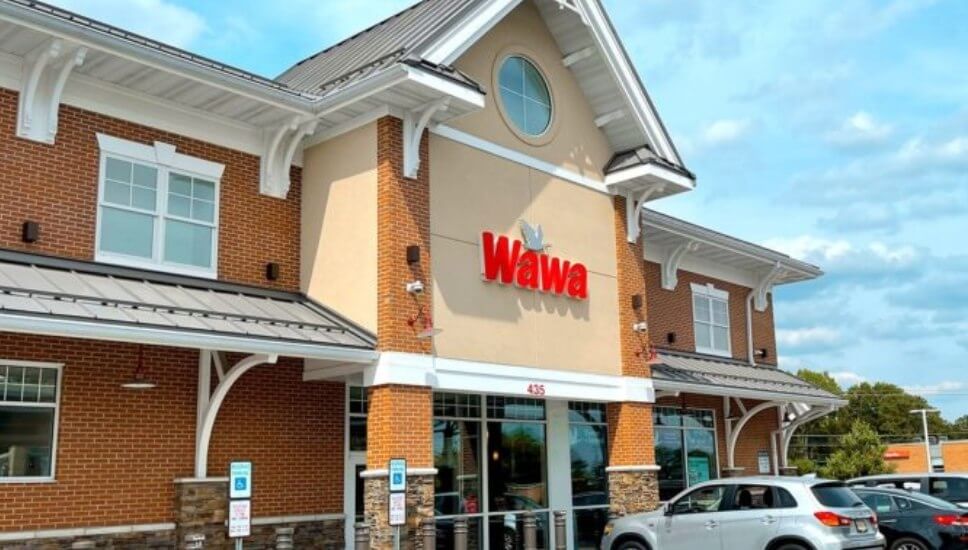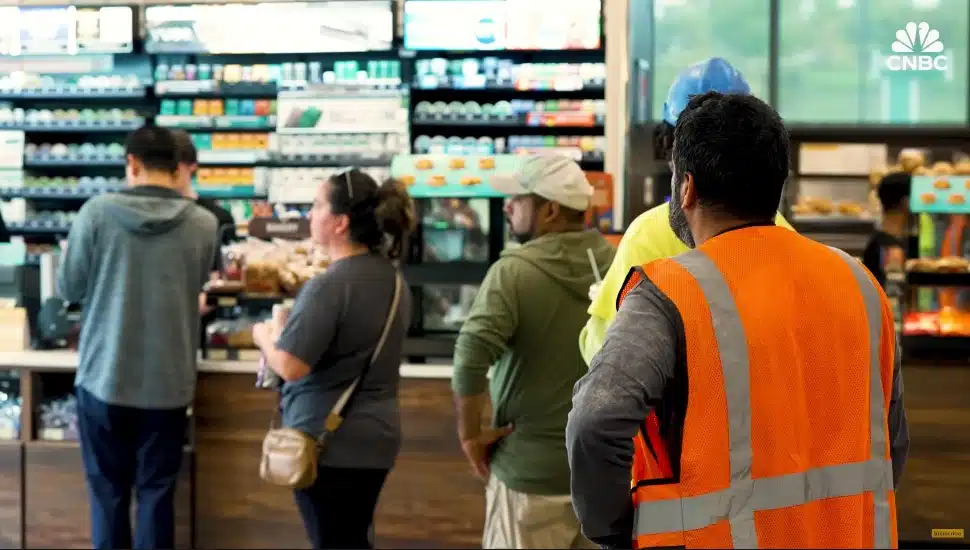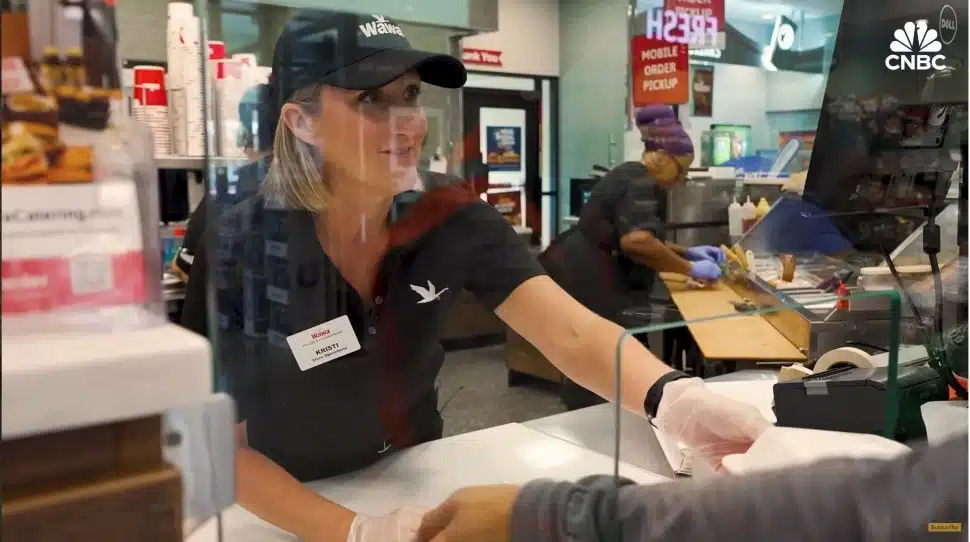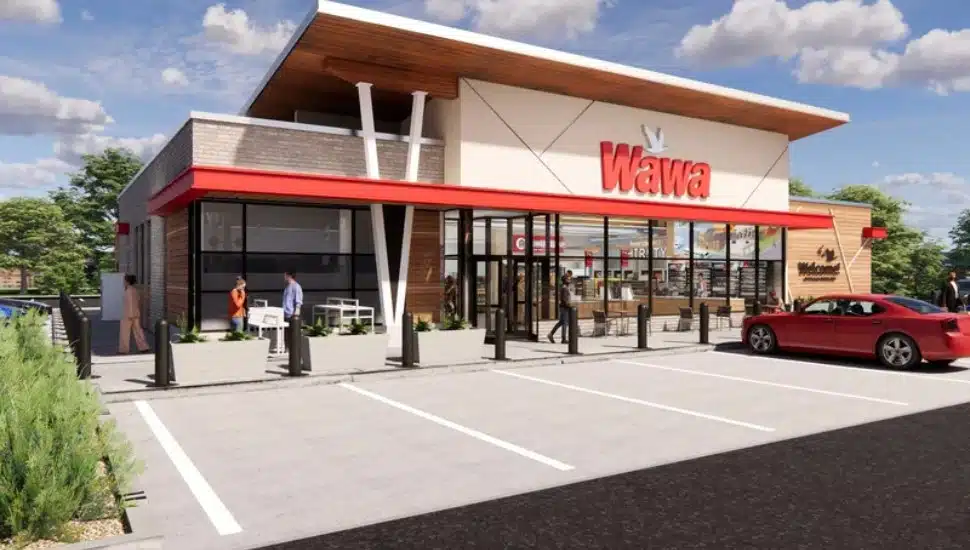

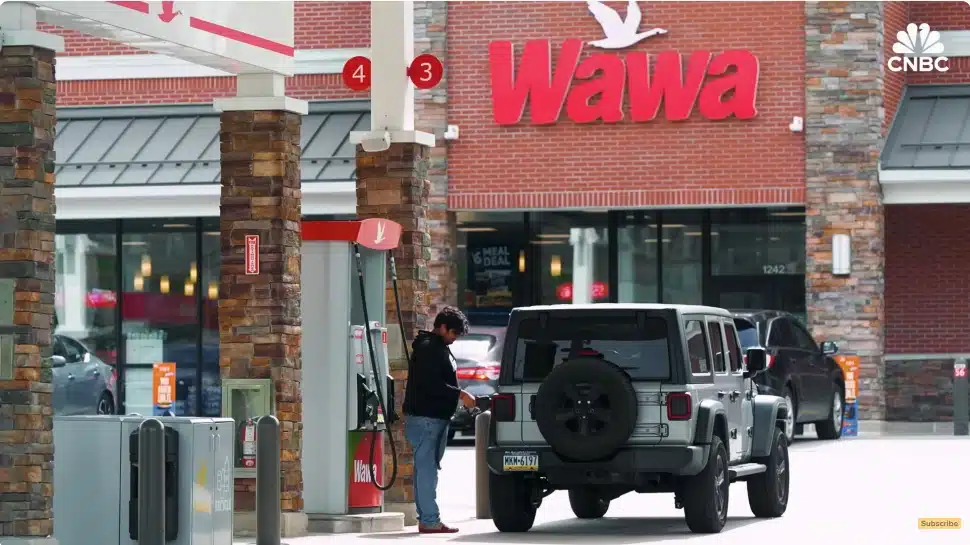
It’s 6:42 a.m. The parking lot is already half full.
Inside, a contractor in mud-caked boots waits for his coffee. A mom in scrubs taps through a breakfast order she’ll eat in the car. Someone grabs a hoagie that they swear tastes “just like it used to,” even if they’re not totally sure that’s true anymore.
Nobody here is thinking about corporate history. Or logistics. Or food-service economics.
They’re just at Wawa. Again.
For something so familiar, so woven into daily life, Wawa is surprisingly misunderstood.
Most of us experience it in fragments: a morning coffee, a late-night hoagie, a tank of gas on the way somewhere else. It’s background infrastructure.
Reliable. Predictable. Always down the street or around the corner.
But step back, and Wawa becomes something stranger, and more interesting.
It’s one of the oldest businesses most of us interact with. One of the largest food operators in the country. And one of the few regional brands that inspires genuine emotional loyalty.
For a private company, Wawa actually shares a lot about itself. You just have to look closely. And then there’s the other half of the story, the part you won’t find on the fact sheet, but that explains why Wawa sparks both devotion and debate.
Let’s start with what the company tells us.
10 Little-Known Facts Wawa Does Share (But Most People Miss)
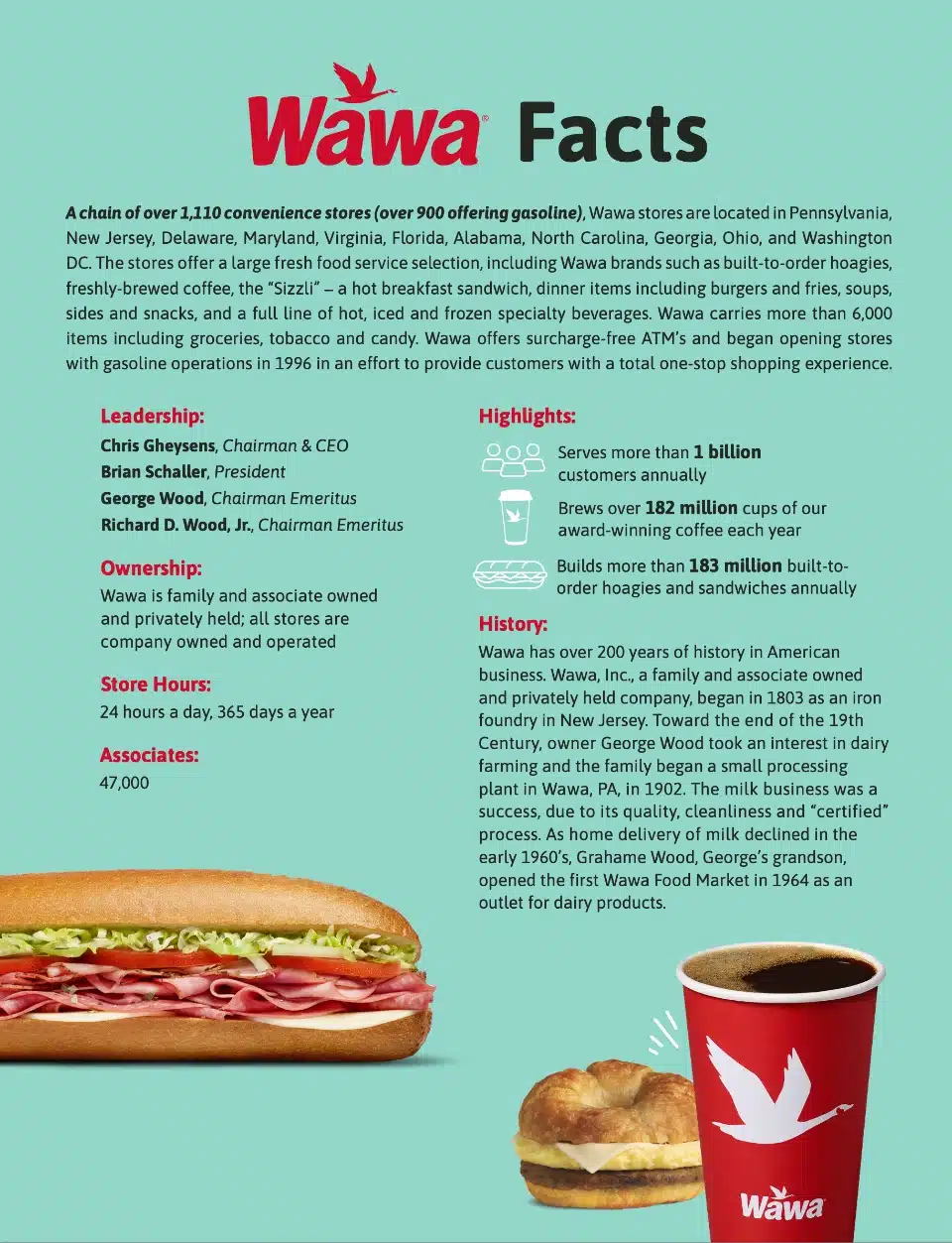
Wawa actually tells this part of its story, just quietly (see the company’s 2025 fact sheet below).
These 10 facts are all public, all right there on the company’s website, but they tend to get lost behind the hoagies, the coffee, and the everyday routine of stopping in and moving on.
1. Wawa serves more than 1 billion customers each year – That number quietly places Wawa among the most widely used food retailers in America, even if it’s rarely framed that way.
2. It didn’t start as a food company at all – Wawa began as an iron foundry in New Jersey. Food, and eventually convenience retail, came much later, after a series of practical pivots driven by necessity, not branding exercises.
3. Dairy came before hoagies – In the late 1800s, the company shifted from iron to dairy farming. A milk processing plant opened in Wawa, Pennsylvania in 1902, giving the company its name.
4. “Wawa” is a place, not a marketing concept – The brand isn’t a made-up word. It comes directly from the town of Wawa, 5 miles west of Media. Many customers live nearby and still don’t know that.
5. The first Wawa store opened to save the milk business – When home milk delivery collapsed in the early 1960s, Wawa opened its first food market in 1964 as a dairy outlet. Convenience retail was a solution, not the original plan.
6. Every Wawa store is company-owned – There are no franchises. Every location is owned and operated by the company itself, a rare level of control at this scale.
7. Gasoline came decades later – Wawa didn’t add fuel until 1996. For more than 30 years, it operated purely as a food and retail business.
8. Wawa is more than 220 years old – The company dates back to 1803. That makes it older than railroads, automobiles, and the very idea of convenience retail. Most people assume Wawa is a mid-20th-century invention. It isn’t.
9. Hoagie production is enormous – More than 183 million made-to-order hoagies and sandwiches are built annually. That’s national-chain volume hiding in plain sight.
10. Coffee is foundational, not optional – Wawa brews over 182 million cups of coffee each year. Coffee isn’t a side business. It’s a pillar.
All of this is public. None of it is secret.
But it’s also not the part of the story people argue about.
11 Little-Known Facts Wawa Doesn’t Put on Its Fact Sheet
This is the part of the story you won’t find in a corporate one-pager.
These aren’t secrets, exactly, but they’re the operating truths that explain why Wawa works the way it does, and why customers feel the changes so sharply when they notice them.
11. Wawa is a food company that happens to sell gas – Fuel drives traffic. Food drives identity. The convenience label masks just how large Wawa’s food operation really is.
12. Hoagies are designed to bring you in, not make the most money.
Margins on core items are thin by choice. The economics rely on frequency, how often you stop, and what else you grab once you’re there.
13. Touchscreen ordering reshaped labor as much as speed.
The kiosks reduced errors, simplified training, standardized execution, and helped stores handle intense rushes with fewer bottlenecks.
14. Store layouts are tested quietly for years.
Pilot stores act as living labs. Many experiments never roll out systemwide, and customers never know they existed.
15. Coffee nearly became a brand problem in the 1990s.
Quality slipped badly at one point. Wawa responded with a serious internal reset, leading directly to today’s coffee-first emphasis.
16. Expansion follows logistics, not headlines.
Florida wasn’t about sunshine or retirees. It was about distribution density and operational control. Growth follows infrastructure.
17. Wawa limits dependence on third-party delivery by design.
Delivery is tested carefully to avoid margin erosion, data loss, and weakened brand relationships.
18. Emotional loyalty is actively measured.
Wawa studies how customers feel, not just how often they visit. Nostalgia is powerful, and dangerous when expectations slip.
19. Menu simplification is an ongoing battle.
Adding items is easy. Removing favorites is painful. But complexity slows execution, and consistency wins at scale.
20. Wawa listens closely to criticism.
Reddit threads, Facebook groups, and “it used to be better” conversations are monitored. Complaints are treated as signals, not noise.
21. Wawa’s growth was historically slow on purpose.
The company avoided rapid franchising and uncontrolled expansion for decades. That restraint protected quality longer than most peers, even if recent growth has tested it.
Why This All Matters
Back in that parking lot, the contractor finally gets his coffee. The mom heads for work. Someone jokes to the cashier about how Wawa “isn’t what it was,” then comes back the next day anyway.
That’s the real story.
Wawa’s fact sheet tells a story of scale, history, and reliability. The untold story is about tension: efficiency versus experience, growth versus familiarity, progress versus memory.
Those tradeoffs explain why Wawa inspires deep loyalty and sharp criticism, sometimes from the same person in the same week.
Wawa isn’t just a place you stop. It’s a system that quietly shapes daily life across Delco and the region. And once you understand both halves. You start to see why those small, ordinary moments inside the store carry so much weight.
Whether that makes you more forgiving, or more demanding, is up to you.
________
By the numbers, according to Wawa’s own factsheet: A privately held, family- and associate-owned company with 1,110+ stores, 47,000 associates, and more than 1 billion customers served each year.
Editor’s Note: This post first appeared on DELCO Today in December 2025.