
Children who are deaf or hard of hearing may experience higher rates of adverse childhood experiences than their hearing peers, posing long-lasting effects on adult mental and physical health.
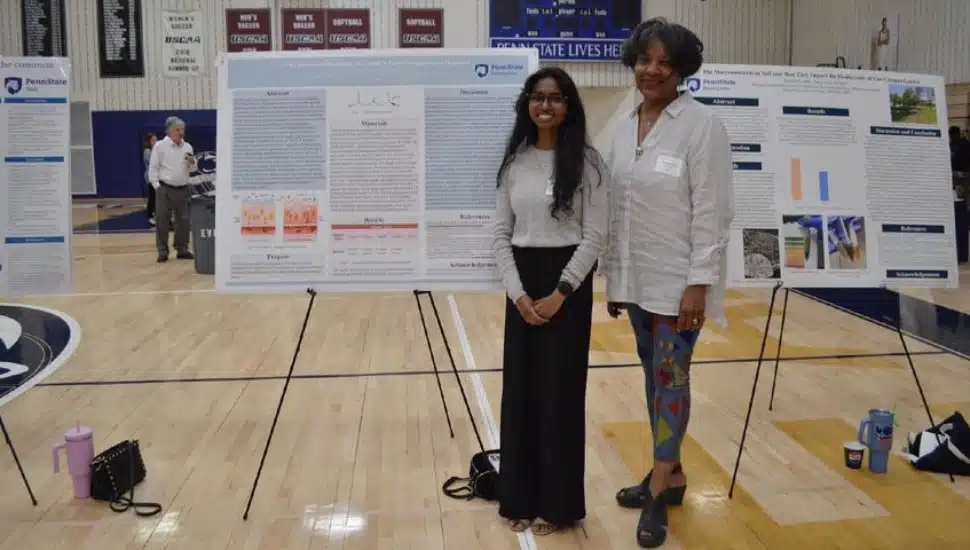
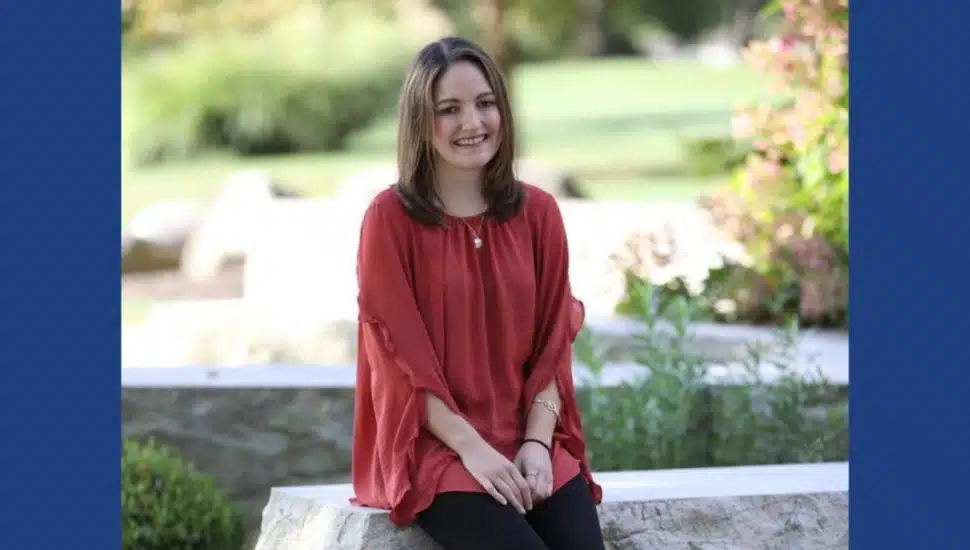
That’s the conclusion of a research team study led by Danielle “Danni” Guth, who started the project as an undergraduate at Penn State Brandywine in Media and continued it after graduating in 2021.
The researchers surveyed 81 d/Deaf and hard-of-hearing participants.
They published their work in the Journal of Child & Adolescent Trauma.
Guth said the study highlights both adversity and resilience within the d/Deaf, which includes those who have an audiological condition and those who are ingrained in the Deaf culture and hard-of-hearing community.
Now a doctoral student studying clinical psychology at West Chester University, Guth worked with Penn State Associate Professor of Psychology Daniela Martin and West Chester University Assistant Professor of Psychology Lauren Brumley.
Together, they found that d/Deaf children face unique adversities. These include being bullied by peers and deprivation of hearing-related information.
They found that individuals who had been deprived of critical health information experienced twice as many of the “traditional” adverse childhood experiences.
These include potentially traumatic events like abuse, neglect, witnessing domestic violence, parental substance abuse or mental illness, or incarceration, making them particularly vulnerable to struggles in adulthood.
However, the study also showed that participants who had higher levels of protective factors, such as social support from friends and family around hearing loss, involvement in the Deaf community, and resilience, had better adult outcomes, even when they had significant adverse childhood experiences.
Guth said this topic was very special for her, which is why she wanted to pursue research on it when she came to Penn State Brandywine in 2017.
“I am hard-of-hearing and have been my entire life, so I’m not immune to the unique struggles and things that this community faces,” she said. “I’ve gone through adverse childhood experiences myself with bullying and discrimination, so I really wanted to study this as part of my career and studies in psychology.
“I also knew that this is a population I want to work with long-term in my psychology career. I want to be an advocate for the Deaf and hard-of-hearing community and spread awareness about this topic.”
The research process began in person but shifted online due to the COVID-19 pandemic.
Guth read many journal articles about adverse childhood experiences in the general population, but nothing in the scientific literature focused on the Deaf community, so the team developed their survey and distributed it to people in the d/Deaf and hard-of-hearing community via social media groups and audiologists distributing the survey to patients.
Conducting research within a community she is a part of helped her better understand her own experiences, Guth said, while also strengthening her commitment to advocacy and clinical work.
“On the personal growth side, it showed that I’m not alone and other people experience what I went through,” she said. “On the professional growth side, I was able to see the impact of these different experiences and different avenues for resilience among future clients. My goal is to work with d/Deaf and hard-of-hearing clients as part of my clinical psychology career.”
Guth is projected to graduate from West Chester University in 2027.
She is also an advanced practicum student clinician for the Community Mental Health Services at West Chester University, a doctoral extern at human-services nonprofit Elwyn, and a social media coordinator for Suburban Research Associates.
She continues to serve as an advocate for this community and population through her social media page, Compassionately Inspired.