
Across the country, shopping malls are fighting for relevance. Once-busy corridors and courtyards now sit quiet. Anchor department stores have vanished.
In many communities, the phrase “dead mall” has become shorthand for a retail model that failed to keep up with changing consumer and retail trends.
And yet, one mall continues to break from that trend.
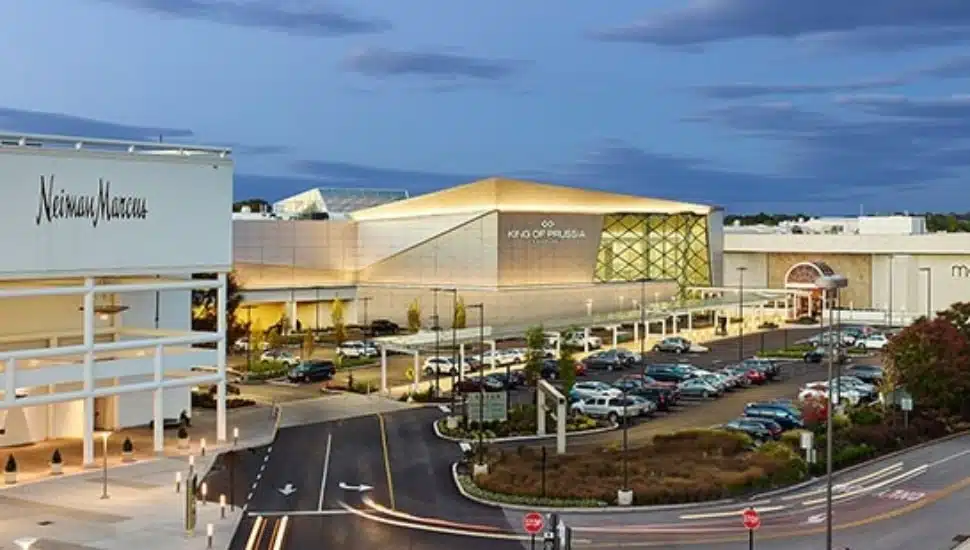
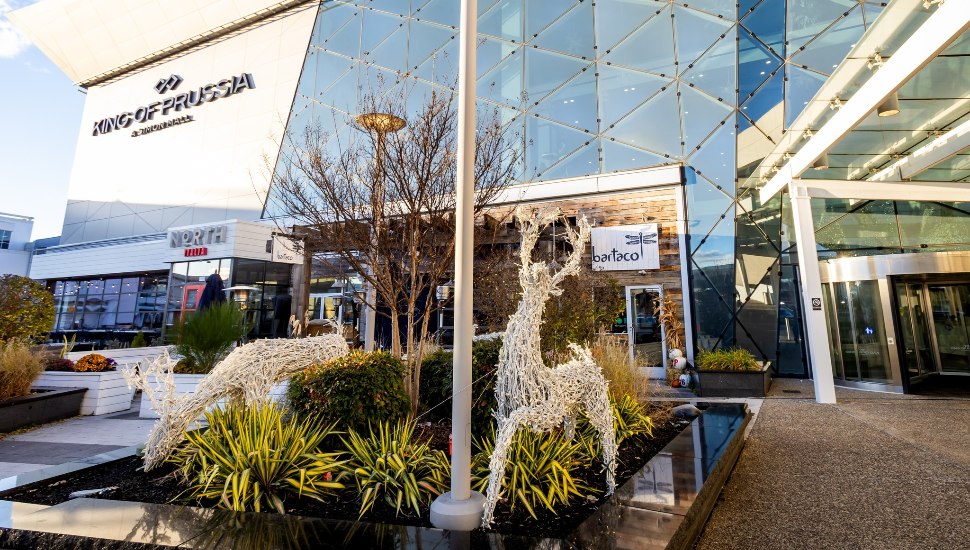
The King of Prussia Mall, in Upper Merion Township, isn’t just surviving, it’s thriving.
While nearby regional shopping centers like Plymouth Meeting Mall, Willow Grove Mall and others struggle with vacancies and declining foot traffic, King of Prussia remains one of the most productive retail properties in the United States.
Here are seven reasons why King of Prussia Mall is prospering.
1. It Operates at a Scale Few Malls Can Match
Size matters in modern retail, and King of Prussia has it in abundance.
With nearly 3 million square feet of retail space, it is one of the largest malls in the country, rivaled nationally only by destinations like the Mall of America in Minneapolis.
That scale creates gravity. Shoppers don’t come for one store, they come for choice. Hundreds of retailers, spread across multiple wings, make the King of Prussia Mall a true one-stop destination.
Smaller shopping malls simply can’t offer the same depth or variety of retail space.
2. A Regional Location That Pulls, Not Just Serves
Many struggling malls were designed to serve a single suburban trade area. King of Prussia was positioned to pull from an entire region.
Located at the crossroads of Pennsylvania Turnpike, the Schuylkill Expressway, and Route 202 and 422, the mall draws shoppers from across Montgomery County, the Main Line, Philadelphia, Bucks County, Chester County, Delaware, and New Jersey.
Its accessibility turns it into a regional hub rather than a neighborhood convenience stop.
That advantage becomes most visible during holiday shopping season, when Black Friday crowds resemble a major tourist attraction more than a local mall rush.
3. Luxury and Flagship Retail That Can’t Be Replaced Online
King of Prussia thrives because it leaned into a retail segment that e-commerce can’t easily replace.
Luxury brands, flagship stores, and showroom-style retail drive longer visits and higher spending. These are stores people plan to visit, not stumble into. They rely on experience, not convenience.
By contrast, many regional malls depended heavily on mid-market department stores. When those anchors declined, the surrounding shopping centers collapsed with them.
The King of Prussia Mall diversified early and aggressively.
4. Continuous Reinvestment Instead of Maintenance Mode
Another major differentiator is ownership and strategy.
King of Prussia Mall is owned by Simon Property Group, the largest mall owner in the country.
Rather than allowing the property to age, Simon has consistently reinvested, expanding, redesigning, and rethinking how space is used.
That includes new wings, upgraded interiors, enhanced food court concepts, and experiential additions like the highly anticipated Netflix House, which blends entertainment with retail.
Shoppers can feel the difference between a mall that is evolving and one that is simply trying to survive.
5. It Prioritizes Experience Over Errands
King of Prussia no longer functions as a place to “run in and run out.” It has become a place to spend time.
Dining now acts as an anchor, with restaurants and gathering spaces encouraging people to linger.
The food court itself has evolved into a destination rather than an afterthought.
In an era where online shopping has already won convenience, King of Prussia competes on experience. That shift has proven essential as traditional shopping centers struggle to redefine their purpose.
6. Strong Financial Performance Reinforces Success
Retail insiders often point to sales per square foot as the clearest indicator of a mall’s health.
While exact audited figures for recent years haven’t been publicly released, the trajectory at King of Prussia is clear.
Industry indicators, including luxury tenant growth, continued strong occupancy, and historical trend data, suggest King of Prussia Mall’s sales per square foot may have topped $1,000 in 2025, though specific audited figures for last year have not yet been released.
That level of performance, if accurate, places the mall among the most productive retail properties in the country.
High sales per square foot attract stronger tenants, justify continued investment, and create a virtuous cycle that struggling malls can’t replicate.
7. It Functions as a District, Not Just a Mall
Perhaps the most important reason for King of Prussia Mall’s success is that it no longer behaves like a standalone mall.
Surrounded by hotels, corporate campuses, and significant office space, it benefits from weekday foot traffic that most regional shopping centers lack.
Business travelers, office workers, and convention guests add a steady stream of visitors beyond weekend shoppers.
Retail today thrives when it’s integrated into how people live and work. The King of Prussia Mall has become part of a broader district, not just a retail box surrounded by parking.
Why Others Struggle
The contrast with nearby malls is stark. Properties like Plymouth Meeting Mall were built for a different retail era, one dominated by department stores and local foot traffic. When consumer habits shifted, those centers struggled to adapt quickly enough.
Once vacancies rise and reinvestment slows, perception follows. A mall labeled as declining often finds it difficult to reverse course.
King of Prussia avoided that fate by never allowing stagnation to take hold.
The Bottom Line
The King of Prussia Mall thrives because it evolved while others stood still.
Through unmatched scale, regional accessibility, luxury retail, constant reinvestment, experiential design, strong financial performance, and integration into a broader commercial district, it has redefined what a modern American shopping mall can be.
In a time when many shopping centers are shrinking, King of Prussia Mall continues to expand its relevance, and its reach, across Montgomery County and beyond.
_________
Editor’s Note: This post first appeared on DELCO Today in January 2026.