
West Chester University President Dr. Laurie Bernotsky laid out the framework for the University to start developing an action plan that would begin launching in the summer of 2026; the action plan will be the university’s first step in its movement from “almost awesome” to “awesome.”
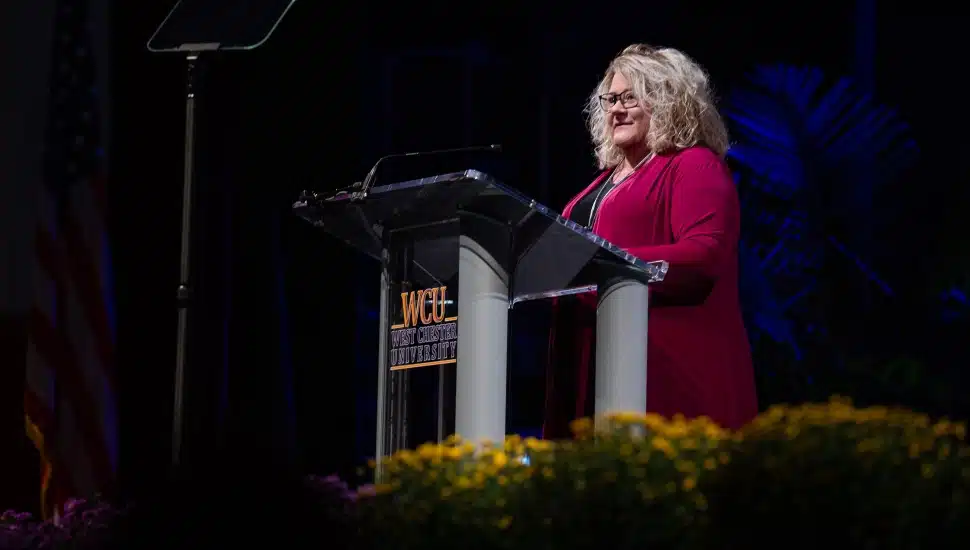
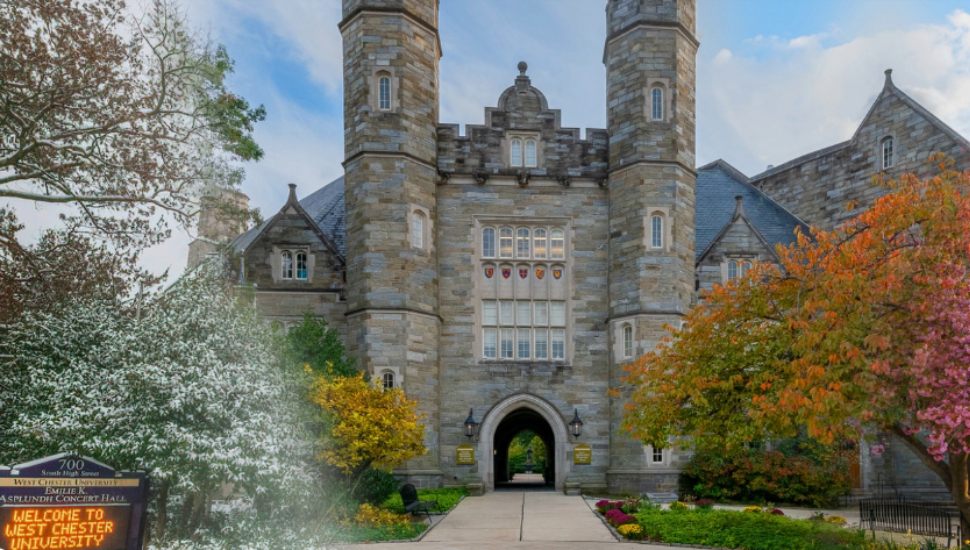
Dr. Bernotsky enthusiastically talked about her last 14 months as president and about an action-focused strategy during her recent Fall Address — a conversational talk in Emilie K. Asplundh Concert Hall on the West Chester University campus.
It was her first campus-wide address to staff, faculty, students, alumni, and friends since her inauguration as the university’s 16th president in July 2024. She started with a shout-out to the students.
“Today is about how we’re going to serve you, keep serving you, and maybe even move the needle a little bit about how we serve you,” she said.
She talked about a 40-session listening tour that she conducted, gathering input from students, faculty, staff, alumni, community members, donors, and elected officials.
The talks revealed three of the university’s biggest challenges.
Housing … but the university is making progress, Dr. Bernotsky said.
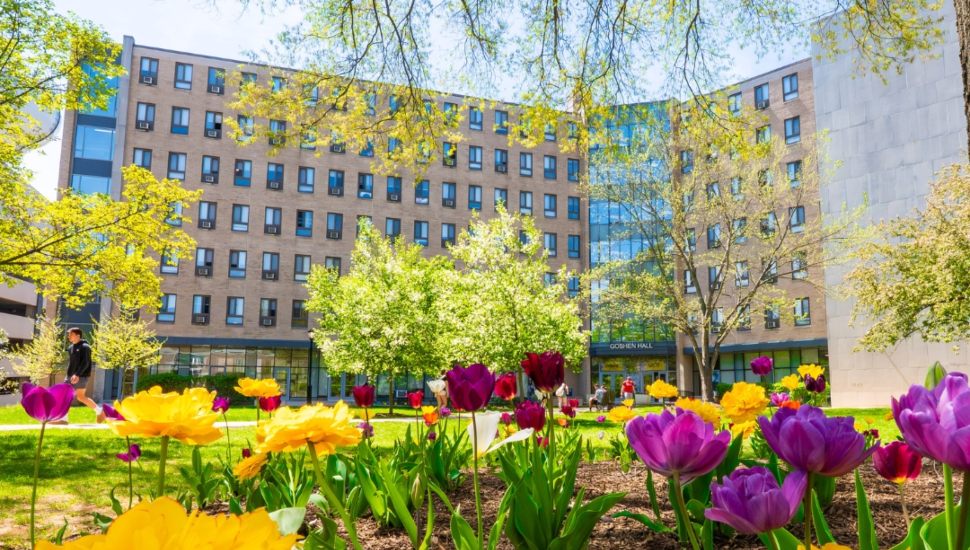
WCU plans to add an additional floor to each of its 11 South Campus apartment buildings.
By vertically expanding each apartment building, the University will add 220 new beds to its overall residential housing complement — without the need for additional land development or the expansion of its South Campus footprint.
Matlack Court, the University’s temporary modular housing community that was constructed this past summer, will provide swing space so bed count remains steady for returning students throughout the four phases of construction that will be completed over a five-year period.
The university is financially stable, but “in the environment we’re in, that’s going to remain something that’s a challenge,” she said.
The talks also revealed a feeling from everyone of trying to do more with less, with students trying to find a work/study/life balance.
In the university’s favor is its innovation, resilience, and adaptability.
“We have grit. We have resilience. They create opportunities for us,” Dr. Bernotsky said.
She also pointed to the university’s R2 research status, which is generating a lot of research activity, and the ability to offer experiential learning to some students.
Dr. Bernotsky is hoping the action plan in development will bring experiential learning opportunities to all of the students.
“Students who get to do experiential learning have a competitive edge when they graduate compared to students who haven’t had that opportunity,” she said. “We are great at this already in the majors where we have it. We just don’t have enough for everybody.
The action plan will be based on three strategic themes:
Be Better.
Staff and faculty should think about why and how they do something, she said.
“Is there something that can be tweaked?” she asked. “Doing things differently doesn’t have to mean doing more.”
Think Bigger.
Fix the same problems that keep recurring by being proactive instead of reactive.
Foster Moments.
Recognize the personal and meaningful experiences students are having while at the university.
“Let’s keep creating conditions that foster moments,” she said.
The Action Plan
Dr. Bernotsky is abandoning the traditional committee creation of a 5- or 10-year strategic plan in favor of a simpler hands-on approach that will involve everyone at the university.
She asked people to start a conversation.
“Start thinking about how you can contribute, how you might be able to say this is in an area where I can make a difference,” using the “be better, think bigger, foster moments” approach.
Everyone was asked to submit one personal and one team-based action step by Spring Break 2026, based on themes that emerged from the listening tour.
Dr. Bernotsky’s leadership team will synthesize the submissions into an updated action plan and will target the summer of 2026 to begin its launch.
The university will know it has arrived at “awesome” when “every student is thriving and has stellar success metrics and has been able to participate in experiential learning,” she said.
When students say they graduated from West Chester, and people know that’s two words outside of Philly, not one word outside of New York, “that will be an awesome day,” she said.
Reactions
Bradley Flamm, West Chester University’s director of the Office of Sustainability, understands and totally supports Dr. Bernotsky’s efforts to bring experiential learning opportunities to all the students.
His office, which focuses on issues of biodiversity loss, climate change, and social justice, offers West Chester University students experiential learning through events and programs, regardless of their major.
“There are all kinds of experiential opportunities that we already do have, but not every student has an opportunity to do it,” he said.
Sara Hinkle, assistant vice president for student affairs, appreciated Dr. Bernotsky’s effort to get everyone involved in an action plan.
“We’ve got our big picture themes, but she really emphasized ‘what are you going to do?’ What are each one of us going to do to support these themes?”
Lauren Linder, assistant director at the Career Center, felt Dr. Bernotsky’s approach was empowering for staff members, “that we could utilize our voices and our thoughts to work on not only ourselves, but our team and then have an impact, hopefully positively, toward the student experience and just being able to serve our students the best that we can.”