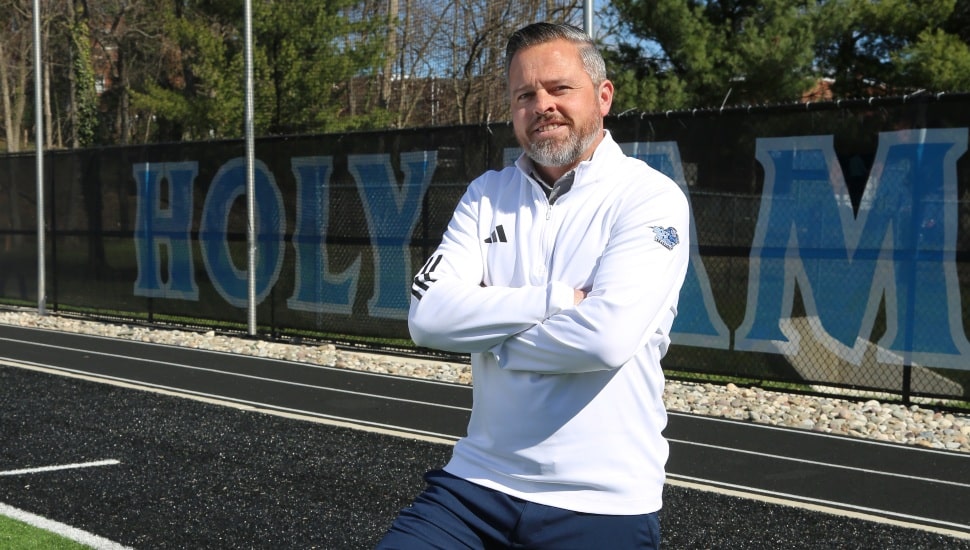

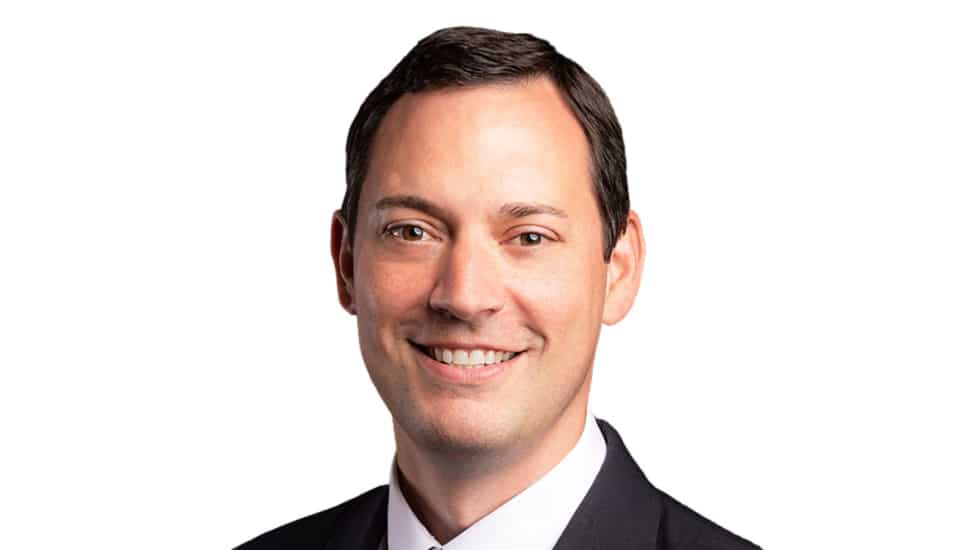

Jeff Bierlein, Director of Commercial Real Estate Banking at S&T Bank, spoke with DELCO Today about growing up in Northeastern Pennsylvania. Sports were the focus of his childhood, from traveling for Little League games to learning leadership as a basketball camp instructor.
After establishing a banking career for himself at PNC Bank, Bierlein transitioned to S&T Bank, a smaller institution where he could pursue those same values of involvement and investment in his local community while accelerating his personal development.
He shared what he’s learned from mentorship as both a mentor and a mentee, and the sports advice he’s applied to his business career.
Where were you born, and where did you grow up, Jeff?
I grew up in Northeastern Pennsylvania, out in the country between Wilkes-Barre and Scranton, in a small town called Falls.
I played a lot of sports growing up. My dad was a High School Teacher and a Football Coach, so he coached all my basketball teams and baseball teams. He was a fantastic athlete, and I may have gotten some of that.
What did your mom do?
My mom was a Registered Nurse for a small rural hospital. She passed away from cancer when I was nine. That was a tough time, and I think it shaped how I view many things in life. I have a very close relationship with my dad and my older sister.
What’s the age difference between you and your sister? Was it just the two of you?
Yes, just the two of us. She’s four years older. She raised her family in Northeastern Pennsylvania, and we talk regularly. I’m close with her husband, and it’s been fun to see her sons succeed in school. Both are in college now.
What memories stay with you from growing up in Falls?
It’s a small community, so it’s your family. It’s who you’re connected with. A pivotal part of my upbringing was going season to season with the various sports and spending a lot of time riding bikes and being outside. I thought of it as a fairly typical childhood.
Did you have a favorite sport?
Baseball was my favorite sport. I played that from tee-ball until I was 16. Living in the country, we were able to travel from town to town to play other Little League teams, which was fun.
I remember, as a pitcher, having some heart-to-heart conversations with my dad on the mound over the years. I played second base and shortstop, too.
Do you have a special memory that stands out from one particular game?
As a little leaguer, we had a pretty good team. It’s every kid’s dream to play in the championship game. We were fortunate enough to do so. I have very clear memories of that game and being on the mound to close out the victory.
I just remember it was fun. There was no pressure. We won, and we liked to win, but it wasn’t “win at all costs.” As it turned out, that was probably the peak of my athletic career!
You said you played baseball until you were 16. What happened?
Injuries started to come up, and I transitioned more towards basketball. I was probably better at basketball at that stage, too, because I was taller. I played on the varsity team in high school.
Did you continue with any sports in college?
For my first job, I worked as an offensive skills instructor for a basketball camp in the Poconos. I started in ninth grade. I got to work with great basketball players, some of whom were older than me. I wasn’t sure how they would take receiving instruction from somebody younger, but it helped me find my leadership voice.
No, you’ve got to really love it to play in college. But I stayed active, playing intramural sports and even playing rec league basketball after college.
Golf has my main attention athletically these days, aside from my kids’ sports.
What about jobs in high school?
I worked there for six years, through college, gradually increasing responsibilities. I realized that wasn’t going to be my career path, but it was a fun experience, being outside, playing basketball, and getting paid a little bit.
When was the first time you recognized yourself as a leader?
I don’t remember one distinct event. It was a culmination of increasing responsibilities and growing self-confidence. But it started at the basketball camp. That was my first opportunity to find my voice as a leader.
Even now, I work with people who have more experience and are very skilled at what they do. I try to find ways to add value and find myself learning quite a bit from those folks.
What kind of music were you listening to in high school?
Music was never a huge part of my life. I listened to whatever my friends introduced me to, and now I listen to what my kids are interested in. I’ve never sought out a concert to go to, but I’ll tag along, so I’ve seen Pearl Jam and U2 and Jimmy Buffett, and Imagine Dragons. I’ve got a decent concert list just because friends and family have wanted to go, and I’ve shared that experience.
My son plays the guitar. He has a very strong interest in music. I’m continually amazed to see his progress as he’s practiced over the years.
You could have gone to a lot of different places for college. Where did you end up going, and why there?
I always envisioned myself going to school in the South, so that’s where I primarily looked. I like warm weather. But I ended up going to the northernmost school I looked at: Dickinson College, in Pennsylvania.
I stepped on campus, and things felt right. I didn’t understand why at the time, but I ended up meeting my wife there, and most of my closest friends to this day. I stay involved in some organizations at Dickinson. I’ve expanded my network to include folks who went there but left before I started or arrived after I graduated.
What do you think made Dickinson so special and such a great choice for you?
Aside from meeting my wife, I was able to curate my own path. It wasn’t a big school. I could get involved and make an impact in the areas I wanted to.
Looking back over your career, who were the people who saw promise and potential in you that maybe you didn’t even know you had?
I’ve been fortunate to have a good support system. My wife’s my best friend. To have such an ally at home that can be forthright with you, it’s a real advantage.
A few years ago, I was awarded the Leader in Construction & Real Estate Award, thanks to the support of many people in my life. It was an extensive selection process. I had letters of recommendation from customers and colleagues, and other people in the industry. It was a humbling experience.
I’ve been fortunate with mentors as well. When I first got into banking and didn’t know much, I had people willing to take the time to teach me. As I relocated for my career, I was able to work with somebody who was well-connected in the marketplace, and I was able to grind through the deals we uncovered as I formed relationships of my own.
The mentors that I have now wouldn’t have been so impactful had I met them 20 years ago. I’ve been fortunate to meet the right people at the right time throughout my life.
S&T even has a mentorship program. It’s been around three or four years now. There are mid-career folks who are mentors and mentees. Each member of the executive leadership team participates. The program has grown consistently since it was founded.
What do you get out of it, both as a mentee and as a mentor?
Within this program, I’ve been just a mentor. What I get out of it is hearing about other people’s journeys. In banking, especially at big institutions, it’s easy to get siloed. You work in your business line. That’s all you’re focused on. But here, we’re able to cross business lines and interact with other folks. You learn what their passions are at work, at home, and in the community.
The first person I got matched with is heavily involved in a different market, but in a community redevelopment aspect. Hearing all the things this person chooses to spend their time doing was impressive.
What brought you to S&T?
The same thing that drew me to Dickinson. It was the opportunity to make a visible impact.PNC was a big, successful bank, and I learned a lot there from very smart people. Coming to S&T in 2017 was somewhat of a lateral move. I was doing the same job as a relationship manager. But I knew that, coming here, my impact could be seen through the financials.
At that time, the bank didn’t have a presence in Chester County, so I was out here by myself, and in the real estate world, that works well. I enjoyed it. It was nice to get an office close to home once the DNB First acquisition was finalized and to be that local voice to say, “Hey, transitions are tough, but there’s a lot of good people here.”
Right before the pandemic started, we bought DNB First. That was a good but tough transition. It was a difficult time to grow a new brand. And DNB did such a great job in the community. Bill Latoff had such a commanding presence. It was a large legacy to live up to.
I’ve been fortunate to serve on the board of the Chester County Chamber of Business and Industry since 2021. It’s been great for me to get more connected to the community, outside of just the commercial real estate world, and help S&T grow the brand in Chester County. The Chamber has a talented staff and an engaged board.
I feel really comfortable with the team we’ve grown at S&T and the customers we’ve added to the portfolio. There are a lot of good things going on.
How do you want S&T to be seen in the Philadelphia market?
We want to be good stewards in the community. We want to serve our customers and communities. That’s as basic banking as it can be. We’ve been around since 1902, but that’s what we want to do across all lines of business, mine included.
In the last few years, we’ve been especially focused on a people-forward banking process. People-forward means supporting employees, customers, shareholders, and the community as a whole. Even though we’re now larger than a community bank, we’re still a community-minded bank. It’s not success at the price of community. It’s a success in supporting the community. A lot of our people, including me, are part of the community we serve, so we care about seeing improvement. We’re not making decisions from states away.
Here we are, more than halfway through 2025. What are you focused on? What are your priorities?
My role recently changed. I’m the Director of Commercial Real Estate Banking now, across all of our markets. We participate in the construction space. We do bridge lending. We do permanent finance term loans. We’re looking at doing good deals for good sponsors. But at the end of the day, it’s about providing credit and deposit solutions for existing customers and new prospects to help grow our business.
As I’ve gotten more integrated into our Ohio and western Pennsylvania markets, I’ve gotten to see that every transaction is different. Every customer is different. Everybody has different priorities, and they’re all important. You have to understand everybody’s story. We’re not a one-size-fits-all shop. We have such a talented team, and we are set up for continued success.
Any projects that you’re excited to see come to fruition?
Working on new projects is a lot of the reasons why I like working in commercial real estate. It’s tangible.
We cover a lot of different asset classes. We finance residential development, multifamily development, industrial, retail, some office, and some self-storage. So, it’s exciting to drive around the Southeastern Pennsylvania market and see all the things we’ve worked on over the last five years.
What do you do with all your free time?
Especially in the fall, the kids’ sports and school schedule dominate the calendar, but I love to play golf. It’s stereotypical banker stuff.
Do you have a favorite local course?
Whichever one I play next is my favorite.
We joined Lancaster Country Club a few years ago. LCC hosted the U.S. Women’s Open in 2024, so it was really in the spotlight last year. We’ve been fortunate to spend a lot of time there. The course is challenging, and they do a great job keeping the conditions at a high level.
Three last questions for you, Jeff. What’s something big that you’ve changed your mind about over the last 10 or 15 years?
The realization that everybody has something going on in their lives. Everybody deserves some patience and some grace. Everybody you know probably has something they’re dealing with, and they might not be willing to share it.
It’s self-awareness, because I know I do, too. Life’s not easy, and you often see the best side of someone’s life publicly, but that might not be the full picture.
It’s a crazy world out there. What keeps you hopeful and optimistic?
We’ve recently instituted a commercial credit training program, so I’ve been fortunate to interview some of the fresh college grads who have applied. You hear a lot about how the next generation is not as engaged or prepared as the previous generation, but I’ve been very impressed. They’re very well-prepared. I compare that to how I was, and I realize that they’re going to be just fine.
I regularly attend my kids’ events at their schools and see the support in the community. Chester County’s a great place. You see parents and other caregivers showing up consistently for the kids.
Everybody has an opinion, and that’s part of the greatness of the country we live in, but it can be difficult. The thing to remember is that everybody’s here for a common goal — to get an education, to get opportunities for the kids. With that support, good things are going to happen. So, I am optimistic.
Finally, Jeff, what’s the best advice you’ve ever received?
Playing sports and being coached by my dad all those years, he ingrained a couple of different things in me. Like, “Being coachable is the key to success.”
He also stressed, “If you take care of the little things, the big things will take care of themselves.” Even in business, as opposed to sports, if you do good things every day, good things will happen.
_____
Publisher’s Note: Helen Harris assisted with this profile.