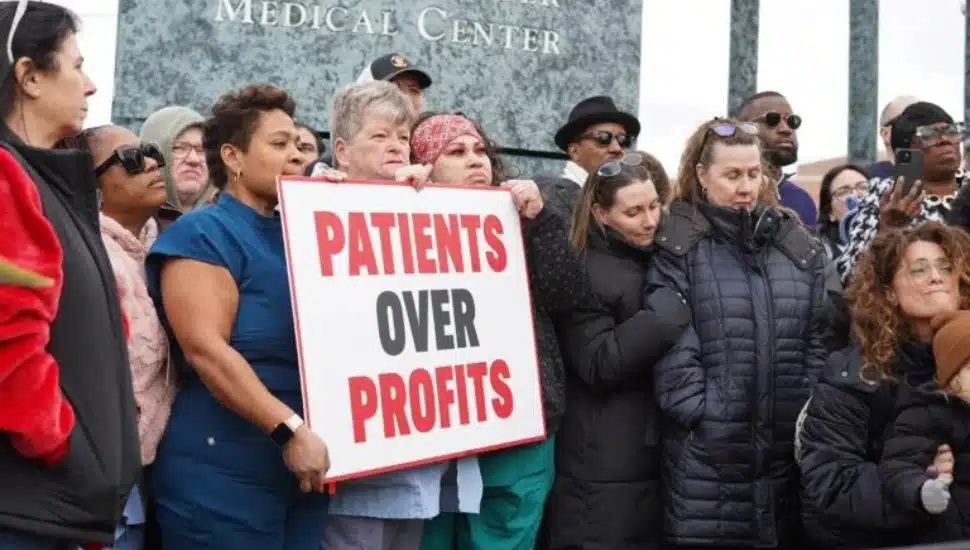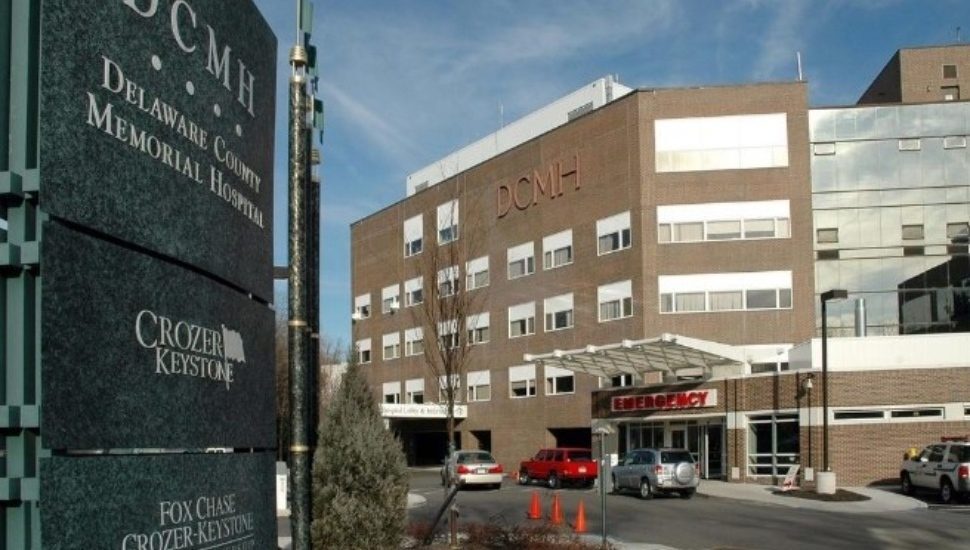


Pennsylvania Gov. Josh Shapiro spoke at a news conference Thursday outside the now-closed Crozer-Chester Medical Center in Upland, calling for limits on private equity in healthcare, writes Katie Bernard for The Philadelphia Inquirer.
The governor gave his support to private equity legislation introduced in the state House and state Senate that would allow the state attorney general to stop healthcare acquisitions and mergers that would impact patient access and public health.
The bills also block companies from selling hospital real estate and leasing it back, which is what helped cripple Crozer Health’s hospitals and led to the health system’s closure in early May.
“I am done letting private equity wreak havoc on our healthcare system,” Gov. Shapiro said Thursday.
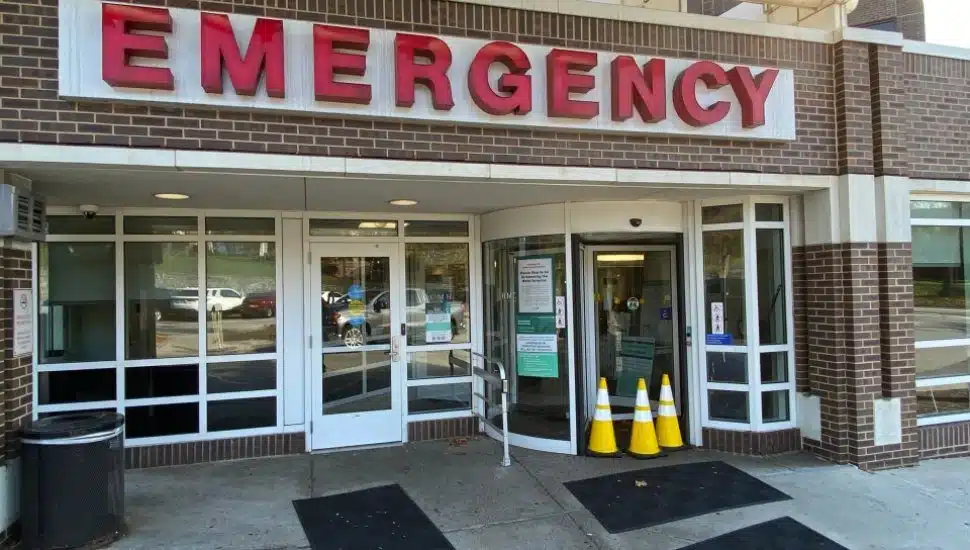
His comment bore out minutes after the conference ended when a woman arrived needing emergency care for her baby at the now-closed facility.
She and the baby were transported by ambulance to Nemours Children’s Hospital 14 miles away, writes Kathleen E. Carey for the Daily Times.
“When private equity is allowed to run rampant through our healthcare system, communities like Delaware County are left with closed hospitals, lost jobs, higher healthcare costs, and limited options to turn to for emergency care,” said state Sen. Tim Kearney in a release from Pennsylvania State Democrats.
State Rep. Lisa Borowski and State Sen. Kearney are members of the Delaware County Legislative Delegation. They are backing both private equity bills, House Bill 1460 and Senate Bill 322.
Pennsylvania House lawmakers could vote on the House bill as early as June.
Specifically, House Bill 1460 and a companion bill, Senate Bill 322, would:
- Grant the Office of the Attorney General expanded authority to review mergers, acquisitions, and other major financial transactions involving health systems.
- Prohibit healthcare sale-leaseback agreements by private equity firms.
- Require healthcare entities to submit detailed financial and operational disclosures before completing major transactions.
- Allow deals to be evaluated on a case-by-case basis.
Kearney and Borowski have been advocating for reforms in the healthcare industry since 2022.
Last year, a similar House bill by Rep. Borowski passed the House but ultimately stalled in the Senate.
Rep. Borowski said how legislators respond to the healthcare crisis by private equity firms “will speak volumes to Pennsylvanians about our courage to do what’s right.”
The governor also announced at the news conference that $1 million in state funding will pay for stopgap EMS services in communities that had relied on Crozer.
Crozer Health owners Prospect Medical Holdings, now in bankruptcy, responded to the governor’s comments in a statement:
“Contrary to the Governor’s assertion, at all times, Prospect Medical negotiated and collaborated in good faith with the Commonwealth and other parties to find a viable path that would enable Crozer Health to remain open.
“This included arranging for Crozer, and all of its assets, to be transferred to any party supported by the Commonwealth for no cash payment free and clear of any claims, as well as keeping Crozer open for as long as possible post-bankruptcy to allow for a local solution to be achieved at the expense of its third party creditors.
“The outcome is extremely unfortunate, and we are continuing to work to provide support for our patients and team members.”
Find out more details from the news conference in The Philadelphia Inquirer.
Find out more about these two companion healthcare bills