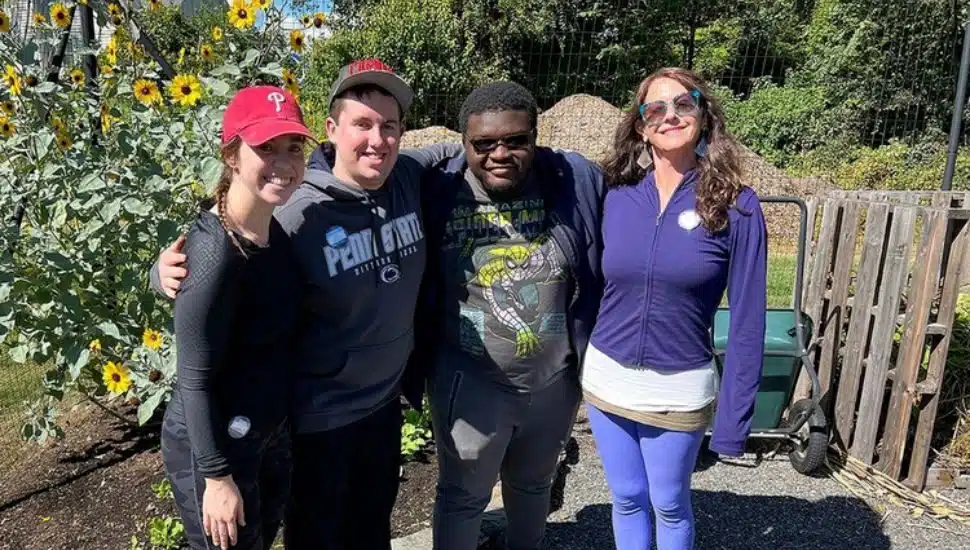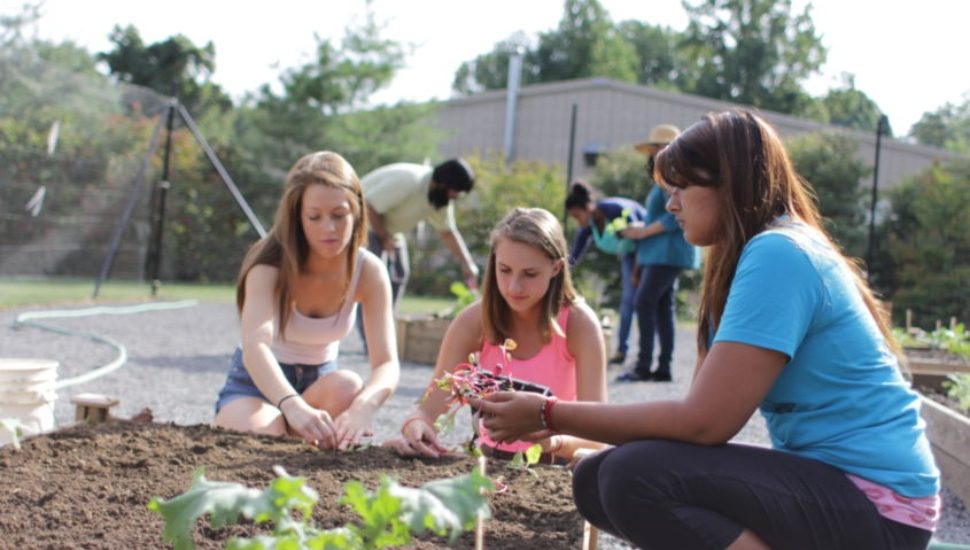


At seven of Penn State’s Commonwealth Campuses, campus gardens and farms help students learn and connect with nature, advance sustainable food practices and promote mental well-being.
The plots at campuses range in size from a few dozen square feet to multiple acres, but each of them shows students new ways to engage with nature and the community around them, writes Taylor Haggerty for Penn State.
Combined, the programs donate hundreds of pounds of food each year to local food banks, including Lion’s Pantry.
They sell produce through farmer’s markets or stands in the community and provide plants for research and in-class demonstrations.
Some are open for visitors to take food as they please, or to practice yoga and mindfulness in an outdoor space.
Across the wide range of programs, the gardens and farms are united in the goal to improve the lives of their campuses and surrounding communities.
For those who participate, they offer a broader sense of understanding: where food comes from, why it matters and how to grow it themselves.
Even small gardens offer a range of opportunities for learning. From managing pests to making paints, each campus offers its own opportunities to develop a better understanding of the natural world. The joy of the experience is what keeps some students coming back to the gardens.
For recent Penn State Brandywine graduate and garden intern Ndella Jagne, showing others what can be done in the gardens was the highlight of her work.
“Seeing how their face lights up because they see something they’ve never seen before, or they see their favorite produce in a different color that they don’t recognize is one of the best parts,” Jagne said.
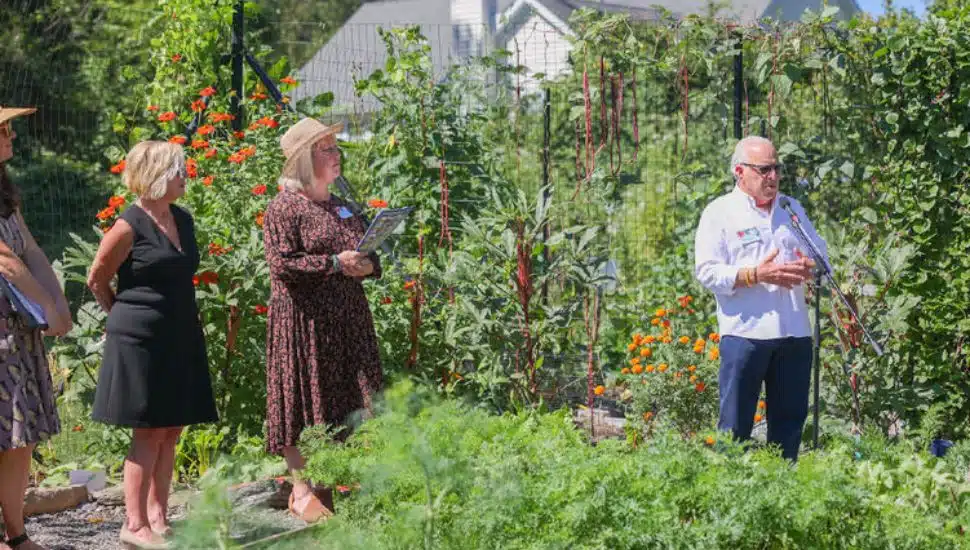
Jagne helped with the ribbon cutting for the garden last year and the weekly harvest days. The work gave her new appreciation for gardening, she said.
“When you’re in the rush of school, you don’t see that you should probably take a step back and rest,” Jagne said. “It’s a good way to engage in nature in ways that you haven’t really thought of before and relax.”
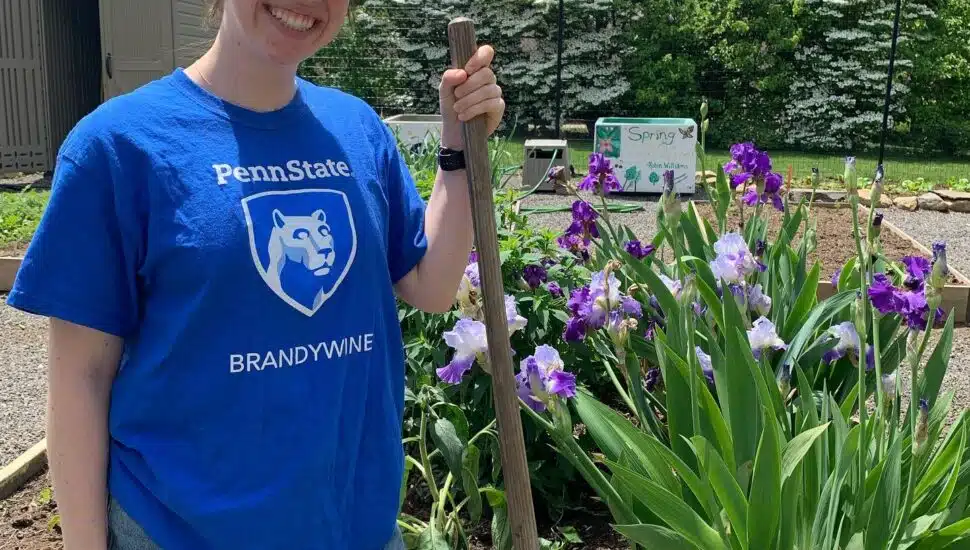
Sustainability is a big part of the garden’s mission at Penn State Brandywine, according to garden manager and adjunct professor Emily Dozor. Her own class comes to the garden as part of its curriculum to learn about sustainable practices, she said.
“We’re reading and learning lessons around sustainable agriculture and United Nations development goals, and then seeing how that sustainability relates to the garden,” Dozor said.
Harvested vegetables are sent to the campus community and local food banks, and food waste from the dining halls is used for composting on campus, Dozor said. The process provides a look at sustainable practices.
“I try to incorporate native Pennsylvania plants and pollinator-friendly plants,” Dozor said. “So many students have never really connected with nature in any real, hands-on way. This can get them inspired to connect with nature, even just to ask, ‘Where does my food come from?’”
The garden is building a seed library, Dozor said, and she’s interested in expanding composting to more of the campus.
The idea, she said, is to show visitors ways to incorporate sustainable practices into their lives.
“It’s important to support students as they’re piecing together this idea of sustainable food and what that means and how they can empower themselves,” Dozor said.
Learn more about all of the garden projects running on Penn State campuses.